Understand charter flights, costs, and booking processes for stress-free travel.

Image via 123RF
Get in touch with us and we'll get back to you as soon as possible.
Here's what sets us apart from the competition
We deliver exceptional experiences at fair, transparent prices, ensuring every journey offers genuine quality, comfort, and unforgettable adventure without unnecessary costs.
Your journey is crafted around your interests, pace, and travel style, giving you a custom-made adventure that feels authentic, meaningful, and entirely your own.
From planning to your final day of travel, our dedicated team is available to guide, assist, and ensure your trip runs smoothly and stress-free.
Find answers to common questions
The nearest major international airport is Victoria Falls (VFA) for convenience, while Harare (HRE) offers more flight options; from either airport Zimtrek arranges road or charter transfers to Hwange lodges.
Many regional and charter carriers enforce strict weight limits (often 15-23 kg checked plus small cabin allowance) and soft-sided bags are usually required; Zimtrek provides specific carrier and weight details when confirming flights.
Yes - Zimtrek coordinates scheduled domestic flights and private charter transfers through vetted local operators to connect parks, lodges, and airstrips as part of your itinerary.
Book regional and charter flights as early as possible-ideally at the time you confirm your itinerary-because seats on popular routes and small aircraft fill quickly, especially in high season.
Zimtrek monitors flight schedules and coordinates alternatives with local operators; we work to rebook connections, adjust ground transfers, or reschedule activities, and will communicate options and any associated costs promptly.
In This Article
Types of Air Travel
Cost Breakdown
Booking Made Easy
If you are comparing air travel options for a safari, business trip, or a multi-stop Southern Africa itinerary, charter flights solve a very specific problem: they reduce the friction of fitting your trip around airline schedules. Instead of buying a seat on a fixed route, you reserve an aircraft for a route, time, and group size that suits your plans. That can mean flying closer to a lodge strip, connecting remote destinations in one day, or avoiding long road transfers that would otherwise break up the trip.
For travellers heading to places such as Botswana’s lodge network, Victoria Falls, or private reserves in Zimbabwe and Namibia, chartering is often about logistics first and comfort second.
The most useful way to think about charter air travel is as a spectrum. At one end sits a commercial airline seat, where you share the aircraft and accept the airline’s timetable. In the middle are charter and semi-private options, where you may still share a smaller aircraft or scheduled private route, but with more flexibility. At the far end is fully private aviation, where the aircraft is reserved for your party alone. The right choice depends on group size, luggage, route complexity, and how much time the journey itself should take.
decision charter travel can solve: schedule, access, or both
Commercial flights are the standard choice for most travellers because seats are sold individually, networks are broad, and prices are usually easier to compare. The trade-off is limited route choice and fixed departure times. Charter flight arrangements are different: you pay for the aircraft or a share of the aircraft rather than one seat on a published flight. Private aviation takes that one step further by giving you dedicated use of the aircraft, crew, and schedule for the journey.
| Option | How it works | Best suited to | Main trade-off |
|---|---|---|---|
| Commercial | Book a seat on a scheduled airline route | Lower-cost city-to-city travel | Less flexibility and more connections |
| Charter | Reserve aircraft for a specific itinerary or group | Remote routes, small groups, tight schedules | Higher trip cost than commercial seats |
| Private | Exclusive use of the aircraft and crew | Maximum privacy and complex itineraries | Highest cost and planning detail |
| Semi-private | Shared cabin or membership-based private travel | Travellers wanting private-style convenience | Limited route network and availability |
Semi-private products can sound similar to charter, but the economics differ. You may be buying a seat on an aircraft that operates under a private-aviation model, not the whole aircraft. That makes the trip easier than a commercial connection, yet it is not the same as having a plane leave only when your group is ready. For Southern Africa, the distinction matters because lodge access, wildlife areas, and border timing can all make schedule control more valuable than a slight savings on airfare.
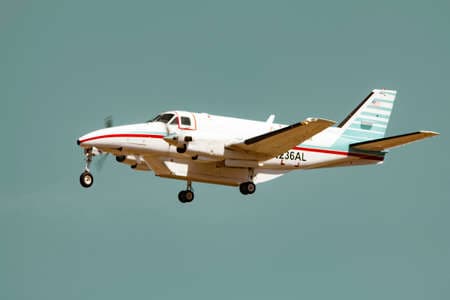
Aircraft category affects not only price but also runway access, baggage capacity, cabin comfort, and how far the aircraft can travel without a fuel stop. Light jets are commonly used for short regional hops, turboprops are useful where short strips or rougher airfields are involved, and larger jets support longer legs with more cabin space. In practical terms, the aircraft type often matters more than the label “charter” itself.
| Aircraft category | Typical strength | Common use case | Planning note |
|---|---|---|---|
| Turboprop | Short-field access and efficient regional flying | Lodge transfers, smaller airstrips, island and reserve access | Expect lower speed but stronger flexibility |
| Light jet | Good value for short-haul private flying | City hops of about 1 to 2 hours | Cabin and baggage space are more limited |
| Midsize jet | Balanced range and cabin comfort | Regional business trips or multi-stop leisure travel | Often the most practical compromise |
| Super-midsize | Longer range and better cabin room | Longer regional sectors with more luggage | Useful when flight time and comfort both matter |
| Heavy jet | Largest cabin and longest range | Intercontinental or high-comfort group travel | Highest hourly cost and airport requirements |
For safari planning in Zimbabwe, Botswana, Zambia, Namibia, and South Africa, turboprops often make the most sense when the airstrip is part of the experience, not just the transfer.
A useful rule of thumb is to match the aircraft to the route rather than to the idea of “going private.” A light jet may be ideal for a short business hop between Johannesburg and Gaborone, but a turboprop may be better for a lodge access route with baggage and a shorter strip. Families and small groups often prefer midsize aircraft because they can spread out, board quickly, and keep the journey together. That is where a specialist planner adds value: the best option is not always the fanciest one, but the one that reduces total travel time and hassle.
When you are comparing options, ask one practical question first: what problem are you trying to solve? If the answer is “I need a direct flight to a remote airfield with a flexible departure,” charter is usually the right category to investigate. If the answer is “I just need the lowest fare between two major cities,” scheduled airline service may remain the better fit.
Charter pricing is usually quoted by the hour, but the final bill depends on more than flight time. For a one-hour sector, a light jet may sit roughly in the US Dollar 4,000 to 7,000 range, a midsize jet around US Dollar 7,000 to 12,000, and a heavy jet at US Dollar 12,000 or more. These are broad estimates, not fixed rates, because aircraft availability, route density, season, and departure airport all affect the quote.
| Cost factor | What it covers | Why it changes the quote |
|---|---|---|
| Flight hours | Aircraft use during the trip | Most operators price primarily by time airborne |
| Positioning | Aircraft moving empty to your departure point | Can add a major portion to the total if the jet is not nearby |
| Fuel | Fuel burn for the route and aircraft type | Longer routes and heavier aircraft cost more |
| Crew and overnight costs | Pilot duty, accommodation, and positioning of crew | Trips with overnight stops cost more than same-day turns |
| Landing and handling fees | Airport, FBO, and ground handling charges | Busy airports and premium handling raise the total |
If you are comparing a charter quote to a commercial fare, make sure you compare total trip cost, not just the hourly headline. A business traveller leaving Johannesburg for a remote lodge may save hours of road transfer even if the flight itself is more expensive. Conversely, a couple flying between major cities may find the charter premium difficult to justify unless the schedule is critical or the aircraft can be shared across several travellers.
A quote that looks low can become expensive if the aircraft must reposition far from the departure airport or wait overnight for your return leg.
The biggest advantage is control. You can often choose your departure time, reduce waiting, and connect routes that are awkward on commercial networks. For Southern African itineraries, that can mean combining a city meeting, a lodge stay, and a beach or safari transfer in one seamless day. Charter also supports privacy, which is valuable for executives, families travelling with children, or guests carrying expensive photographic equipment.
The drawbacks are equally real. Charter is more expensive than a commercial ticket, especially for a solo traveller. Availability can be limited during peak holiday periods, and weather or aircraft positioning can still affect timing. Smaller aircraft may have stricter baggage limits than passengers expect, particularly on safari routes where soft bags are preferred. And unlike airline travel, there are usually no loyalty points to offset future trips.
| When charter works best | When commercial is smarter |
|---|---|
| Remote lodge access, tight schedules, mixed-ground transfers | Simple city pair with regular nonstop flights |
| Small groups sharing one aircraft cost | One traveller with flexible dates |
| Photographic, family, or executive privacy needs | Trips where points, baggage allowance, and frequency matter most |
The booking process is simpler than many travellers expect, but good results depend on giving the operator the right information up front. Start with your route, dates, passenger count, baggage estimate, and whether the trip is one-way, same-day return, or multi-leg. Then ask for aircraft options rather than just one aircraft type, because availability changes quickly and a sensible substitute may save money.
One of the most useful booking tools is the empty leg. This is a repositioning flight that an operator would otherwise fly without passengers. If your plans match the direction and timing, you may secure a better rate. The trade-off is reduced flexibility: empty legs usually have fixed dates, limited routing, and can change if the operator’s main itinerary changes.
Best practice: ask for the aircraft registration, baggage limits, included waiting time, and whether landing fees or ground handling are bundled into the quote.
For international travel, also confirm customs and immigration timing at both ends, plus the ground transfer plan from the airfield. A smooth charter journey is usually built on three moving parts: the aircraft, the airport handling, and the road transfer. If one of those is vague, the trip can still feel disjointed even when the flight itself is excellent.
Safety oversight varies by country, but a key distinction in the United States is between Part 135 and Part 91 operations. Part 135 governs commercial charter and commuter operations, while Part 91 generally covers private operations. That difference matters because charter passengers should understand under which rules the flight is being operated and whether the operator uses third-party safety auditing.
| Safety checkpoint | What to confirm | Why it matters |
|---|---|---|
| Operating certificate | Whether the flight is run under commercial charter rules | Confirms the operator is authorised for passenger carriage |
| Safety audits | ARGUS or Wyvern-style ratings where relevant | Provides an external look at safety systems and maintenance controls |
| Crew duty and maintenance | Pilot hours, maintenance schedules, and backups | Reduces avoidable operational surprises |
A strong operator should be able to explain aircraft maintenance, crew qualifications, and contingency planning in plain language. If an answer feels evasive, treat that as a warning sign. Safety is not about glamorous cabins; it is about process discipline, documented maintenance, and compliant crew scheduling.
Tipping on charter flights is not usually expected in the way it may be at a hotel or restaurant, but a gratuity can be appropriate when the crew provides exceptional service, helps with difficult logistics, or supports a high-touch itinerary. If you do tip, do it discreetly and in line with the service level and local customs. For many travellers, a thank-you note or positive feedback to the operator is just as valued.
A practical etiquette rule: keep luggage within the aircraft limits, arrive ready for a punctual departure, and confirm any special requests before travel day.
Good charter etiquette also means respecting the crew’s briefing, asking about photo or cabin restrictions before recording content, and understanding that small aircraft operate with tighter weight and balance limits than airline cabins. If you are organising the trip for a group, share the packing rules early so nobody arrives with hard cases, excess bags, or oversized gear that cannot be loaded efficiently.
Get in touch with us and we'll get back to you as soon as possible.
Here's what sets us apart
We deliver exceptional experiences at fair, transparent prices, ensuring every journey offers genuine quality, comfort, and unforgettable adventure without unnecessary costs.
Your journey is crafted around your interests, pace, and travel style, giving you a custom-made adventure that feels authentic, meaningful, and entirely your own.
From planning to your final day of travel, our dedicated team is available to guide, assist, and ensure your trip runs smoothly and stress-free.
Don't just take our word for it
Keep reading