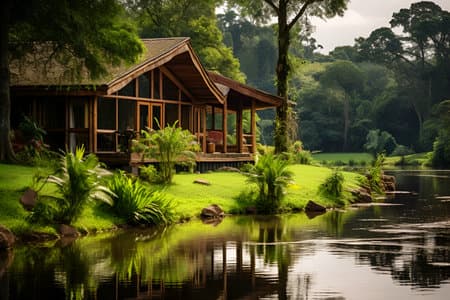
Navigate your stay with sustainability in mind for an unforgettable African experience.
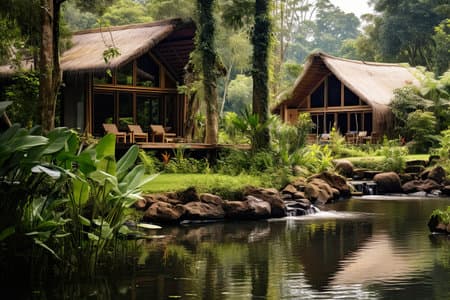
Get in touch with us and we'll get back to you as soon as possible.
Here's what sets us apart from the competition
We deliver exceptional experiences at fair, transparent prices, ensuring every journey offers genuine quality, comfort, and unforgettable adventure without unnecessary costs.
Your journey is crafted around your interests, pace, and travel style, giving you a custom-made adventure that feels authentic, meaningful, and entirely your own.
From planning to your final day of travel, our dedicated team is available to guide, assist, and ensure your trip runs smoothly and stress-free.
Find answers to common questions
Zimtrek arranges a range of accommodations including tented camps, mobile camps, permanent safari lodges, and guesthouses, selected to match different travel styles and budgets.
Pack lightweight, neutral-coloured clothing, layers for cool mornings and evenings, sturdy footwear, a wide-brimmed hat, sunscreen, insect repellent, and any personal medications; specific gear may be recommended depending on your activities.
We partner with a curated network of operators based on reputation, location, conservation practices, guiding quality, and guest reviews to ensure reliable standards and seamless logistics.
Most partner lodges and camps can accommodate dietary needs and special requests if informed in advance; Zimtrek will pass requests to the property and confirm arrangements during booking.
Yes; Zimtrek designs tailor-made itineraries and can secure family-friendly rooms, connecting tents, or private-use campsites to accommodate families and small groups.
In This Article
Eco-Friendly Essentials
Steps to Choose Right
Avoid Common Pitfalls
Choosing an eco-conscious lodge is less about a label and more about how the property operates day to day. In Southern Africa, genuinely thoughtful lodges usually reduce pressure on water, energy, and fragile habitats while still giving you a comfortable base for safari travel. That can mean solar power, efficient water heating, careful waste separation, low-impact building materials, and wildlife-sensitive design that keeps vehicles, lights, and foot traffic in check. The best properties also support nearby communities through jobs, guiding, sourcing, and conservation partnerships.
A strong sustainability story should be specific. If a lodge says it is “green” but cannot explain how it saves water, manages waste, or supports conservation, treat that as a sign to ask more questions.
For Southern African safari travellers, the most useful way to judge a lodge is to think in trade-offs. Off-grid lodges may offer a more immersive bush setting, but they can also have tighter limits on air conditioning, laundry, or late-night charging. Larger luxury camps may provide more amenities, yet still be designed around strong environmental controls. The right choice depends on whether you value remoteness, creature comforts, wildlife access, or family practicality. Zimtrek often helps travellers match that balance to the destination, whether that is Botswana’s Okavango region, Zambia’s game-rich national parks, Namibia’s desert lodges, or Zimbabwe’s safari circuits.
| Sustainability feature | What it usually means | Why it matters |
|---|---|---|
| Solar power | Electricity from on-site panels, sometimes backed up by generators | Reduces dependence on fuel and can lower emissions |
| Water management | Low-flow fittings, greywater reuse, or strict laundry scheduling | Critical in dry regions and remote camps |
| Community sourcing | Local food, staff training, and local suppliers | Keeps more value in the destination economy |
| Conservation contribution | Park fees, anti-poaching support, or habitat projects | Links your stay to measurable conservation outcomes |
Can affect energy use, water demand, and local livelihoods in remote safari areas
Before comparing properties, clarify what matters most on your trip. If you are travelling with children, for example, you may need family rooms, flexible meal times, and shorter transfer legs. If your priority is wildlife photography, ask whether the lodge has quiet hides, private vehicles, or guiding that fits early departures. If you want a romance-focused safari, small tented camps with limited rooms often offer a better sense of privacy than larger resorts. These basics shape whether a property is truly suitable, not just sustainable in theory.
Do not assume that remote automatically means sustainable. A lodge can sit in a beautiful location and still waste water, overuse plastic, or source most supplies from far away.
A useful prerequisite is deciding how much comfort you need versus how much footprint you are willing to accept. In southern Africa, some of the strongest eco-lodges are intentionally modest in scale: fewer rooms, lighter infrastructure, and more reliance on the natural setting. Others are higher-end but invest heavily in solar systems, water treatment, and conservation programmes. If you are planning a multi-stop itinerary, Zimtrek can also help you avoid long, inefficient transfers that increase emissions and waste travel time. That planning layer matters just as much as the lodge itself.
Start by looking beyond the website headline. Read the lodge description carefully and identify concrete actions rather than broad statements. A property that mentions solar arrays, waste-water treatment, plastic reduction, or local employment is giving you a clearer signal than one that only uses terms like “eco-chic” or “responsible luxury.” Then compare those claims with the location. A lodge in a dry region should have a stronger water story; a riverfront property should explain erosion control and wastewater handling; a camp near a sensitive wildlife corridor should describe how it limits vehicle movement and light pollution.
Next, check how the lodge performs in practice. Ask whether housekeeping is daily or on request, whether filtered water is provided in refillable bottles, and whether meals rely on imports or nearby farms. These details may seem small, but they reveal how sustainability is built into operations. In the Southern African safari market, the most credible eco-properties usually explain their model clearly because they know travellers want evidence, not slogans. Zimtrek’s curated supplier approach is designed around that same principle: keep the itinerary elegant, but make sure each component earns its place.
| Step | What to examine | Good sign |
|---|---|---|
| 1. Read the lodge story | How the lodge describes its environmental model | Specific systems and measurable actions |
| 2. Check the location fit | Water stress, wildlife sensitivity, and access routes | Design that matches the local environment |
| 3. Review operations | Laundry, waste, bottles, generators, and menu sourcing | Operational detail, not just branding |
| 4. Match your travel style | Room types, guiding style, transfers, and meal flexibility | Comfort level suits your itinerary |
The best eco-lodges are usually transparent enough that you can explain their sustainability model in one paragraph after reading the details.
One of the biggest mistakes is booking based on branding alone. Words like eco, green, and sustainable are widely used, but they do not tell you whether the lodge actually reduces impact. Another common error is ignoring logistics. A lodge may look excellent on paper, yet require long road transfers that add fatigue and make the trip less rewarding. In Southern Africa, a well-planned itinerary usually balances lodge quality with routing efficiency, especially when combining safari areas such as Botswana, Zimbabwe, Namibia, or South Africa.
Travellers also sometimes confuse rustic with responsible. A simple camp is not automatically sustainable, and a polished lodge is not automatically wasteful. What matters is the process behind the experience. For example, a lodge may operate with limited electricity, but if it runs frequent generator hours and uses disposable products throughout, the environmental benefit may be weaker than expected. Likewise, a property with strong conservation messaging may still have poor laundry practices or imported supplies that undermine the story. Good planning means asking about the whole system.
If a lodge cannot answer simple questions about refillable water, waste separation, or local sourcing, consider that a warning sign rather than a minor gap.
Another pitfall is failing to compare like with like. A small tented camp in a private reserve is not the same as a larger lodge in a national park, even if both use sustainable practices. Room count, guiding style, access to vehicles, and meal structure all affect the feel of the stay. For couples, a quiet, low-room-count property may be ideal. For families, a lodge with more flexibility around meals and activity timing may be a better fit, even if it is slightly less secluded. Zimtrek’s planning approach is useful here because the right stay is rarely the one with the loudest environmental claims; it is the one that suits your trip and still respects the destination.
Use this short checklist before confirming a booking. It helps separate genuine sustainability from surface-level marketing and keeps your trip aligned with your values. If a lodge passes most of these points, it is usually a strong candidate for travellers who want comfort with a lighter footprint.
| Checklist item | What to confirm | Why it matters |
|---|---|---|
| Energy use | Solar, efficient backup power, limited waste | Shows lower operational impact |
| Water policy | Refill stations, low-flow fittings, laundry controls | Especially important in dry regions |
| Food and staffing | Local sourcing and local employment | Supports the destination economy |
| Conservation link | Direct support for habitat or wildlife programmes | Connects your stay to measurable impact |
| Practical fit | Room type, transfers, activity timing, and comfort level | Ensures the lodge works for your trip |
Before you book, ask for the inclusions in writing. That helps you compare lodges fairly, especially when one property includes guided activities and another charges separately for them.
Get in touch with us and we'll get back to you as soon as possible.
Here's what sets us apart
We deliver exceptional experiences at fair, transparent prices, ensuring every journey offers genuine quality, comfort, and unforgettable adventure without unnecessary costs.
Your journey is crafted around your interests, pace, and travel style, giving you a custom-made adventure that feels authentic, meaningful, and entirely your own.
From planning to your final day of travel, our dedicated team is available to guide, assist, and ensure your trip runs smoothly and stress-free.
Don't just take our word for it
Keep reading