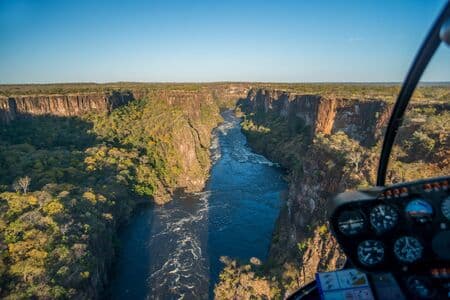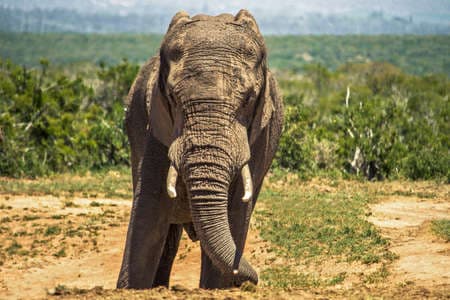
Discover affordable family safari options that fit your budget and create lasting memories.

Image via 123RF
Get in touch with us and we'll get back to you as soon as possible.
Here's what sets us apart from the competition
We deliver exceptional experiences at fair, transparent prices, ensuring every journey offers genuine quality, comfort, and unforgettable adventure without unnecessary costs.
Your journey is crafted around your interests, pace, and travel style, giving you a custom-made adventure that feels authentic, meaningful, and entirely your own.
From planning to your final day of travel, our dedicated team is available to guide, assist, and ensure your trip runs smoothly and stress-free.
Find answers to common questions
Pack lightweight, neutral-coloured clothing, a warm layer for early-morning drives, sturdy shoes, sun protection, insect repellent, a good camera/binoculars, and any required medications or vaccinations after consulting your healthcare provider and local travel advice.
We work with a curated network of vetted lodges, camps, guides, and ground operators selected for local knowledge, safety standards, experience, and suitability to the traveller’s interests and budget.
Yes; itineraries can be tailored for wildlife photography, birding, family-focused activities, honeymooners, and adventure travel, with appropriate accommodations, vehicle options, and guide specialisations arranged on request.
Zimtrek specialises in safaris across Southern and East Africa, with core destinations including Zimbabwe, Botswana, Zambia, South Africa, Namibia, Kenya, and Tanzania.
Zimtrek designs tailor-made safaris including game drives, walking safaris, mobile tented camps, photographic safaris, and combined wildlife-and-cultural itineraries to suit solo travellers, couples, families, and small groups.
In This Article
Cost Transparency
Destination Insights
Itinerary Samples
A budget family safari is not about stripping the trip down to the bare minimum. It is about directing money toward the parts that matter most: safe routing, reliable transport, family-suited lodges, and enough time in the right wildlife areas to make the journey feel worthwhile. For most families, the biggest cost drivers are not just accommodation and park fees, but how many times you move between destinations, whether you fly or drive, and the ages of the children in the group. In practice, the most affordable trips are usually the ones that keep transfers simple and avoid trying to cover too much ground.
A realistic budget safari still includes private transport, family-friendly lodging, and enough buffer for meals, activities, and park charges. The savings come from smart routing, not from cutting essentials.
For Southern Africa, the best value usually comes from trip styles that combine one major wildlife area with one secondary stop, rather than stringing together several long-haul flights. Families with younger children often do better with shorter game drives, lodges that accept children without complicated restrictions, and destinations that are easy to access from major airports. Older children and teens can handle longer drives and may enjoy a broader route, especially if the itinerary adds boat trips, guided walks where permitted, or a scenic stop such as Victoria Falls as part of the wider journey. Zimtrek’s planning approach is built around this kind of matching, because the same budget can feel very different depending on the ages and energy levels in the group.
The most common mistake is comparing safaris only by the nightly lodge rate. A lower room price can be offset by expensive internal flights, compulsory transfers, or park entry charges. Families should look at the total trip cost per day, then ask what is included: meals, game drives, child policy, laundry, and whether a private vehicle is needed. That is the only reliable way to compare options across countries.
Typical per-person-per-day planning range for family-friendly safari value trips, depending on country, season, and comfort level
A sensible family safari budget should be built from the ground up. Start with accommodation, then add park fees, transfers, meals, guide costs, and the price of a private vehicle if your family wants flexibility. In 2026 planning terms, a family of four can often expect a mid-range safari to fall between US Dollars 2,800 and 6,500 for a 4- to 5-night trip in a value-focused destination, before international flights. Shorter trips cost less overall but often feel more compressed, while longer trips are better value per night if they stay in the same region.
| Cost item | What it usually covers | Family planning note |
|---|---|---|
| Accommodation | Family room, chalet, or tented suite | Often the biggest share; children may share at reduced rates |
| Park fees | Reserve or national park entry | Varies sharply by country and age band |
| Transport | Private vehicle, transfers, fuel | Self-drive can save money in South Africa but needs confidence |
| Meals | Half board or full board | Family packages are easier to budget when meals are included |
| Activities | Game drives, boat trips, walks | Teens can justify higher-activity itineraries |
Child pricing is not uniform. Some lodges discount children strongly when they share, while others apply age-based surcharges for private vehicles, triple rooms, or exclusive-use activities.
Peak season pricing usually rises because demand is stronger and availability narrows, especially in Kenya’s Masai Mara and Tanzania’s northern circuit. Green season travel can be a useful saving strategy, particularly in South Africa and parts of Zimbabwe, where the landscapes are still rewarding and family roads are easier to manage. The trade-off is that game viewing may be more dispersed and some camps reduce their schedules. Families who are flexible with dates can often unlock meaningful savings by travelling outside school-holiday peaks.
South Africa is usually the easiest entry point for budget-conscious families because Kruger offers a wide range of accommodation, self-drive possibilities, and strong road access. It suits families who want a straightforward first safari, especially if they are comfortable planning around malaria precautions in selected areas. Kenya can work well for families who want classic savannah scenery and a mix of wildlife and lakes, but the better-known reserves can become expensive quickly during school holidays. Tanzania delivers exceptional wildlife density in the Serengeti and Ngorongoro, yet family budgets must account for longer transfers and often higher lodge costs. In other words, Kenya and Tanzania can feel more dramatic, while South Africa often wins on convenience and value.
| Destination | Value for families | Best fit |
|---|---|---|
| South Africa, Kruger | Strong value, many lodge levels, easier self-drive | First-time safari families and older children |
| Kenya, Masai Mara and lakes | Good wildlife but can be pricier in peak periods | Families wanting classic game viewing and varied landscapes |
| Tanzania, Serengeti and Ngorongoro | Excellent wildlife, higher routing costs | Families with more time and a bigger safari budget |
| Zambia and Zimbabwe | Good for add-on safari combinations and quieter lodges | Families pairing wildlife with Victoria Falls |
Uganda and Rwanda are less commonly chosen for this type of safari because they are not the strongest value destinations for standard family game-viewing trips, and they are better known for specialist wildlife experiences. For most families comparing pure safari budgets, South Africa, Kenya, and Tanzania will provide the clearest contrast. If a family wants a balanced route that blends scenery, wildlife, and easier logistics, Kruger often offers the most straightforward cost control.
A 7- to 9-day safari works best when it avoids too many long transfer days. For a younger family, a practical model is three nights in a private concession or reserve near Kruger, followed by two or three nights in a second area such as a scenic lodge with easier pacing. Budget-wise, this often keeps the trip manageable because you are paying for fewer moves and fewer one-way transfers. A family of four can sometimes plan a Kruger-focused 7-night trip from roughly US Dollars 4,200 to 8,000, depending on whether the lodge is mid-range or more exclusive.
For families with older children, a Kenya route combining the Masai Mara with Lake Naivasha or Lake Nakuru can be rewarding, but it needs careful budgeting because the reserve fees and transfers can add up. A 7-night trip may sit around US Dollars 5,500 to 9,500 for four people if private transport and decent family rooms are included. A Tanzania version, using the Serengeti and Ngorongoro, often needs a larger budget still, especially if flying between sectors. That said, those routes can justify the cost when wildlife viewing is the priority and the family has the time to do them properly.
If you want the best value per day, keep one base for longer and let the wildlife come to you. Moving less usually saves money and keeps children fresher.
Families planning in Southern Africa often get the smoothest results when they combine a reliable safari core with a short add-on rather than trying to cover several countries in one trip. That approach also makes it easier to match the itinerary to the children’s ages, sleep schedule, and appetite for early starts. Zimtrek’s destination knowledge is especially useful here because the right route for a family of teenagers will be very different from a route for children under ten.
For practical planning, families should also think about what they want the safari to feel like. If the goal is comfort and simplicity, a lodge-based trip in South Africa may be the strongest value. If the goal is a once-in-a-lifetime wildlife journey with a little more logistical complexity, Kenya or Tanzania may justify a higher budget. The key is to match the country to the family’s pace, not just to the photos on a brochure.
For family travel, the operator matters almost as much as the destination. A good safari planner does more than book rooms; they shape daily driving times, confirm child policies in writing, choose lodges with useful room configurations, and build in enough flexibility for naps, bad weather, or a child who simply needs a quieter day. That is where budget families often get the most value. A slightly better operator can save money by preventing costly mistakes, such as booking a lodge that requires two separate rooms or a camp that only accepts older children on drives.
Look for operators with clear memberships or affiliations such as ATTA or KATO, plus recent family-specific reviews that mention vehicle quality, pacing, and responsiveness.
It also helps to ask how they handle emergencies and route changes. A serious operator should be able to explain backup vehicle arrangements, who meets the family at each transfer point, and whether they work with medical and air-evacuation coverage such as AMREF when appropriate. Families do not need the most elaborate setup, but they do need a planner who can explain the system without hand-waving. If the answers are vague, the trip is unlikely to feel well managed.
Logistics can make or break a budget safari. Families with younger children usually do better with shorter driving days and lodges that allow flexible meal times. Many safari camps have age minimums for certain activities, especially walking experiences or open-vehicle drives, so it is wise to check those rules before paying a deposit. Where malaria is relevant, families should discuss prevention with a qualified travel-health professional well before departure and plan packing around bites, sun exposure, and hydration. The aim is not to overcomplicate the trip, but to remove avoidable stress.
| Logistics issue | Why it matters | Practical family approach |
|---|---|---|
| Age minimums | Some camps restrict young children on drives | Choose lodges with flexible family policies |
| Malaria precautions | Relevant in parts of Kruger, Kenya, Tanzania, Zambia, Zimbabwe | Plan early and ask about room screens, nets, and repellent |
| Drive length | Long drives can be tiring for children | Prefer shorter transfers and midday breaks |
| Vehicle choice | Space affects comfort and visibility | Ask for a vehicle with good legroom and shade |
One practical detail that catches many travellers out is clothing. White clothing is often a poor choice on safari because dust shows quickly on road sections and pale colours can attract attention from insects in some areas. Neutral layers in beige, olive, or brown are more forgiving and usually better suited to game-viewing conditions. Families should also pack hats, snacks, reusable water bottles, and a small day bag with wipes and spare layers, especially if the itinerary includes early starts and cooler mornings.
Self-drive can be a strong money-saver in South Africa, especially in and around Kruger, but it is not right for every family. Guided travel is often better for first-timers because it removes the burden of navigation, fuel planning, and game-drive routing. In Kenya and Tanzania, guided trips are usually the more practical choice because reserve access, road quality, and transfer logistics can be more complex. Families who want to keep costs down without losing convenience should compare self-drive in South Africa with guided travel elsewhere rather than assuming every country works the same way.
The biggest budgeting error is buying a trip that looks affordable until the extras appear. Park fees, private vehicle supplements, and child surcharges can change the price by a significant margin. Another mistake is assuming one safari style fits every age group. A route that is ideal for teenagers may be too tiring for toddlers, while a short, lodge-based itinerary may feel too gentle for older children who want more movement and variety. Matching the trip to the children’s age is the fastest way to protect both the budget and the family experience.
Do not compare package prices without checking whether the quote includes park fees, transfers, drinks, and private game drives. The cheapest headline price is not always the best value.
A second mistake is booking too much movement. Families often want to see several famous parks, but every additional transfer adds cost and fatigue. The more efficient choice is usually one strong wildlife area plus one add-on stop that fits naturally. Another common oversight is assuming that package resellers can solve all planning problems. Large retail-style sellers may be fine for simple hotel bookings, but safari travel often needs specialist routing, local lodge knowledge, and destination-specific advice. A tailored planner is usually better once parks, child ages, and transfer times enter the picture.
Finally, travellers sometimes ignore the season. School holidays are convenient but often expensive. Green-season dates can provide better value and quieter lodges, especially if the family is comfortable with some weather variability. For many households, the best safari is not the one with the lowest headline rate; it is the one that keeps the whole family happy, moving comfortably, and spending money where it counts.
A good-value family safari is built on clarity. Know your budget range, choose a destination that suits the children’s ages, and ask for a quote that separates the real costs instead of hiding them. South Africa is often the easiest starting point for value and convenience, while Kenya and Tanzania can deliver outstanding wildlife experiences when the family has more time and budget flexibility. Zimbabwe and Zambia can also work well as part of a mixed route, especially when paired with Victoria Falls and a smaller safari section.
If you are deciding between destinations, think in terms of rhythm rather than just price. The right itinerary is the one your family can enjoy comfortably from the first transfer to the final game drive. That is also why Zimtrek plans family trips with detailed logistics, trusted lodge partners, and route choices that respect both budget and attention span.
Get in touch with us and we'll get back to you as soon as possible.
Here's what sets us apart
We deliver exceptional experiences at fair, transparent prices, ensuring every journey offers genuine quality, comfort, and unforgettable adventure without unnecessary costs.
Your journey is crafted around your interests, pace, and travel style, giving you a custom-made adventure that feels authentic, meaningful, and entirely your own.
From planning to your final day of travel, our dedicated team is available to guide, assist, and ensure your trip runs smoothly and stress-free.
Don't just take our word for it
Keep reading