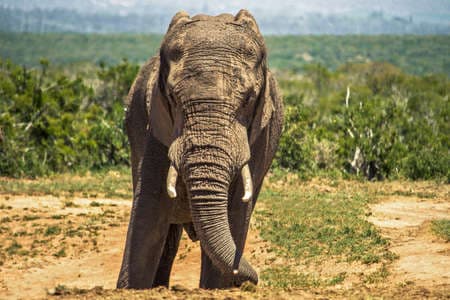
Explore how to choose sustainable safari experiences that benefit both wildlife and local communities.
Get in touch with us and we'll get back to you as soon as possible.
Here's what sets us apart from the competition
We deliver exceptional experiences at fair, transparent prices, ensuring every journey offers genuine quality, comfort, and unforgettable adventure without unnecessary costs.
Your journey is crafted around your interests, pace, and travel style, giving you a custom-made adventure that feels authentic, meaningful, and entirely your own.
From planning to your final day of travel, our dedicated team is available to guide, assist, and ensure your trip runs smoothly and stress-free.
Find answers to common questions
Pack lightweight, neutral-coloured clothing, a warm layer for early-morning drives, sturdy shoes, sun protection, insect repellent, a good camera/binoculars, and any required medications or vaccinations after consulting your healthcare provider and local travel advice.
We work with a curated network of vetted lodges, camps, guides, and ground operators selected for local knowledge, safety standards, experience, and suitability to the traveller’s interests and budget.
Yes; itineraries can be tailored for wildlife photography, birding, family-focused activities, honeymooners, and adventure travel, with appropriate accommodations, vehicle options, and guide specialisations arranged on request.
Zimtrek specialises in safaris across Southern and East Africa, with core destinations including Zimbabwe, Botswana, Zambia, South Africa, Namibia, Kenya, and Tanzania.
Zimtrek designs tailor-made safaris including game drives, walking safaris, mobile tented camps, photographic safaris, and combined wildlife-and-cultural itineraries to suit solo travellers, couples, families, and small groups.
In This Article
Steps for Sustainable Safaris
Community Engagement
Common Pitfalls
The easiest way to choose a responsible safari is to start with outcomes, not slogans. In Southern Africa, a genuinely sustainable trip should reduce pressure on sensitive wildlife areas, pay fairly into the local economy, and give you a lower-impact way to enjoy the bush without stripping away comfort or authenticity. That means looking beyond labels like “eco” or “green” and asking what the operator actually does on the ground.
For Zimtrek travellers, this usually begins with three filters: where you are going, how you will move between places, and who benefits from your spend. A short, well-planned itinerary that combines a few nights in one area often has a smaller footprint than a fast-paced route with repeated domestic hops and unnecessary road transfers. It also tends to create better wildlife viewing because you spend more time in the field and less time in transit.
Questions to ask: footprint, community benefit, and animal welfare
Practical rule: if an operator cannot clearly explain its conservation or community contribution, assume the claim is weak until proven otherwise.
A reliable operator should be able to explain how its lodges, guides, and transport partners work together to lower impact. Look for compact camps in existing tourism nodes rather than scattered development in untouched areas. Ask how water is managed, whether electricity is supplemented by solar power, and how waste is handled when supplies arrive in remote places. In Southern Africa, those details matter because many safari regions are arid or semi-arid, and resource use has a direct local impact.
| What to check | Strong sign | Weak sign |
|---|---|---|
| Guide knowledge | Can discuss animal behaviour, tracking ethics, and park rules clearly | Relies on scripted sales talk and vague promises |
| Lodge operations | Solar support, careful water use, and waste sorting are explained | No visible systems or unclear environmental practices |
| Local sourcing | Meals, crafts, and staff hiring reflect nearby communities | Little evidence that local suppliers benefit |
For travellers booking through Zimtrek, the advantage is curation. Instead of sorting through dozens of properties, you can focus on a few that fit your travel style: family-friendly lodges with sensible game-drive schedules, intimate camps for photographers, or relaxed combinations that pair wildlife areas with Victoria Falls or Botswana’s private reserves. The most sustainable choice is often the one that avoids overproduction and matches the trip to the destination’s carrying capacity.
Tip: ask whether the lodge uses scheduled departures and shared activities. Well-managed shared logistics often lower fuel use without reducing the quality of the safari.
Responsible wildlife viewing starts before the vehicle leaves camp. Keep a respectful distance, avoid asking guides to pressure animals for closer sightings, and choose operators that brief guests on silence, speed, and positioning. Ethical wildlife encounters depend on patience. In places such as Hwange, Chobe, or the Zambezi Valley, a calm vehicle and a knowledgeable guide can produce better viewing than aggressive chasing or crowding.
| Interaction type | Responsible approach | Avoid |
|---|---|---|
| Game drives | Short viewing stops and respectful spacing | Encircling animals or repeated crowding |
| Walking safaris | Small groups with qualified guides and clear briefing | Unstructured walks without safety or ecological context |
| Photography | Natural-light patience and no baiting | Using food, noise, or flash to force an image |
A useful benchmark is whether the experience prioritises animal welfare over guest excitement. If the itinerary promises constant close-up action, that is a warning sign. Better safari design leaves room for natural behaviour, seasonal movement, and the possibility that a sighting is brief. That honesty is part of sustainability.
The strongest safari products create value that stays in the region. That can mean jobs for local staff, training for guides, purchases from nearby farmers, and revenue-sharing with community projects. In Zimbabwe and neighbouring destinations, this matters because tourism often supports areas where formal economic opportunities are limited. A lodge that buys vegetables locally or employs mechanics, trackers, and hospitality teams from surrounding communities contributes more than a lodge that imports everything from afar.
Look for evidence, not intention: staff origin, supplier lists, community visits, and locally made crafts are more convincing than broad claims about “giving back.”
Community benefit is also visible in how travellers are hosted. Good operators design respectful visits to villages, cultural centres, or conservation projects without turning people into scenery. The best experiences are those where local partners set the pace and decide what is shared. For travellers, that often feels more authentic and results in better long-term outcomes than staged encounters built purely for photos.
If you are planning a Southern Africa safari with Zimtrek, ask for lodges and routes that connect wildlife viewing with community-led experiences in a thoughtful way. A short stay at a community-linked camp, followed by a few nights in a private reserve or national park, can create a trip that is memorable, practical, and easier to justify from a responsible-travel perspective. The point is not to travel less; it is to travel with clearer intent.
The most common mistake is believing that a sustainability label is enough on its own. Some properties use strong language but offer little detail about land use, waste, or community relationships. Another frequent error is choosing a trip only because it is remote or exclusive. Isolation does not automatically equal responsibility; in some cases it simply means higher resource use per guest and more pressure on fragile access routes.
Travellers also sometimes focus only on the lodge and ignore the transfer chain. A safari can look responsible on paper but lose ground if it depends on unnecessary flights, poorly coordinated road transfers, or repeated long detours. In Southern Africa, cleaner trip design often comes from fewer handovers, sensible routing, and using one base well rather than trying to cover too much in one itinerary.
| Mistake | Why it matters | Better approach |
|---|---|---|
| Booking on branding alone | Green language can hide weak practices | Ask for specifics on sourcing, staffing, and conservation |
| Overpacking the route | More transit increases fuel use and fatigue | Choose a slower itinerary with fewer moves |
| Pushing for closer animal contact | Can disturb behaviour and create stress | Accept natural distances and patient viewing |
Before confirming a trip, work through a simple planning checklist. It helps you compare options without getting distracted by marketing language or unnecessary add-ons. The goal is to understand whether the itinerary is built for real-world sustainability, not just visual appeal.
Warning: if every answer sounds generic, ask again. Responsible operators should be able to give route-specific and property-specific explanations.
If you want a useful benchmark, compare two itineraries side by side: one that tries to include too many destinations, and one that spends longer in fewer places. The second option is often more relaxed, easier to operate responsibly, and better for the guest experience. It also gives you more time to appreciate details such as birdlife, tracks, local guiding knowledge, and the pace of the landscape.
In practice, sustainable safari design often looks unremarkable at first glance, which is part of why it works. A camp may use solar support for selected operations, reduce laundry frequency to save water, and source produce from farms within the region. Another property may employ local trackers whose knowledge improves guest experience while strengthening livelihoods. None of this is flashy, but it adds up.
A strong example is a safari circuit that pairs a national park with a private concession and a community-linked lodge. Guests get varied habitats and guiding styles, while the trip spreads income across different local stakeholders. Another practical example is a family safari that uses one main base for several nights, cutting down on transfers and making it easier to manage energy use, meals, and guest activity planning. These are the kinds of choices Zimtrek can help shape when building Southern Africa itineraries around Zimbabwe, Botswana, Namibia, South Africa, Zambia, and nearby regions.
Tip: ask for examples from the exact route you want, not a generic sustainability statement. Good operators can usually explain what is happening at a specific lodge or camp.
A responsible safari is less about perfection and more about consistent, thoughtful choices. When you choose a well-run operator, accept natural wildlife behaviour, and favour itineraries that support local livelihoods, your trip becomes part of a healthier tourism model. That does not mean lowering standards. It means insisting on quality that is measured in guiding, conservation support, and community benefit as much as in comfort.
For travellers planning Southern Africa, the best approach is to treat sustainability as a planning criterion from the start. Ask direct questions, compare real details, and prefer routes that use time and logistics wisely. If the safari feels slower, more considered, and better connected to the places you visit, there is a good chance you are choosing well.
Get in touch with us and we'll get back to you as soon as possible.
Here's what sets us apart
We deliver exceptional experiences at fair, transparent prices, ensuring every journey offers genuine quality, comfort, and unforgettable adventure without unnecessary costs.
Your journey is crafted around your interests, pace, and travel style, giving you a custom-made adventure that feels authentic, meaningful, and entirely your own.
From planning to your final day of travel, our dedicated team is available to guide, assist, and ensure your trip runs smoothly and stress-free.
Don't just take our word for it
Keep reading