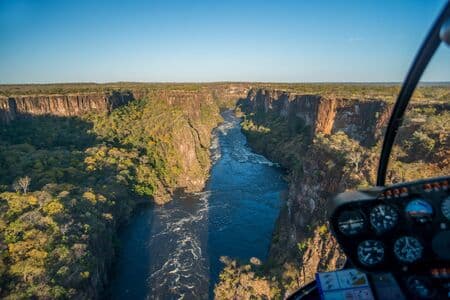
Engage in meaningful conservation efforts while exploring Africa's rich wildlife.
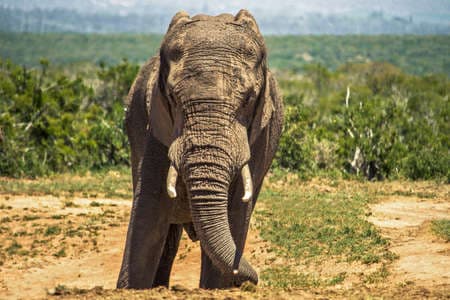
Image via 123RF
Get in touch with us and we'll get back to you as soon as possible.
Here's what sets us apart from the competition
We deliver exceptional experiences at fair, transparent prices, ensuring every journey offers genuine quality, comfort, and unforgettable adventure without unnecessary costs.
Your journey is crafted around your interests, pace, and travel style, giving you a custom-made adventure that feels authentic, meaningful, and entirely your own.
From planning to your final day of travel, our dedicated team is available to guide, assist, and ensure your trip runs smoothly and stress-free.
Find answers to common questions
Pack lightweight, neutral-coloured clothing, a warm layer for early-morning drives, sturdy shoes, sun protection, insect repellent, a good camera/binoculars, and any required medications or vaccinations after consulting your healthcare provider and local travel advice.
We work with a curated network of vetted lodges, camps, guides, and ground operators selected for local knowledge, safety standards, experience, and suitability to the traveller’s interests and budget.
Yes; itineraries can be tailored for wildlife photography, birding, family-focused activities, honeymooners, and adventure travel, with appropriate accommodations, vehicle options, and guide specialisations arranged on request.
Zimtrek specialises in safaris across Southern and East Africa, with core destinations including Zimbabwe, Botswana, Zambia, South Africa, Namibia, Kenya, and Tanzania.
Zimtrek designs tailor-made safaris including game drives, walking safaris, mobile tented camps, photographic safaris, and combined wildlife-and-cultural itineraries to suit solo travellers, couples, families, and small groups.
In This Article
Conservation Impact
Effective Participation Steps
Avoid Common Pitfalls
The best conservation-focused trips in Southern Africa are not defined by how “wild” they sound in a brochure. They are defined by whether the operator can explain exactly where your money goes, who benefits, and what kind of field work or community support the tour makes possible. In practice, that means looking for tours that connect you to real conservation outcomes: anti-poaching support, habitat restoration, wildlife monitoring, community education, or rehabilitation work carried out by credible partners.
A strong conservation tour should explain the project, the species or ecosystem involved, and the visitor role in plain language. If those details are vague, the impact is likely vague too.
For travellers in Zimbabwe, Botswana, Namibia, South Africa, Zambia, and nearby regions, the most useful first filter is whether the itinerary is grounded in the landscape you want to support. A wetland protection visit in the Okavango Delta should look very different from a predator-monitoring stay in Hwange or a rhino-focused experience in South Africa. You are not simply choosing a destination; you are choosing a conservation system.
| What to check | Why it matters | What good looks like |
|---|---|---|
| Project partner | Shows whether the conservation work is credible | Named reserve, NGO, research unit, or community trust |
| Visitor activity | Determines how meaningful your participation will be | Field monitoring, tracking, planting, data collection, or education visits |
| Benefit model | Shows who receives the economic value | Revenue-sharing, ranger support, community employment, or direct conservation funding |
| Group size | Affects disturbance and field quality | Small groups, limited vehicle numbers, low-noise protocols |
A good operator should be able to answer three direct questions: what conservation issue the tour supports, how visitors participate without disrupting fieldwork, and how the experience is priced. In Zimbabwe and Botswana, for example, a serious operator may build an itinerary around protected-area fees, community visits, and specialist guides rather than around long shopping stops or generic game drives. That structure matters because conservation tourism works best when the visit creates reliable funding and a reason for local people to keep wildlife on the land.
is better than a vague “eco” label with no conservation detail
Once you have chosen a tour, the quality of your participation depends on preparation. Conservation experiences are most useful when travellers arrive informed, respectful, and ready to follow field instructions. The goal is not to “help” by improvising; the goal is to support trained people working in difficult environments. That is especially important in Southern Africa, where sensitive species such as rhino, elephant, pangolin, wild dog, and ground-nesting birds can be affected by noise, crowding, and poor viewing behaviour.
Tip: read the pre-departure notes carefully. The most valuable conservation experiences often depend on punctuality, neutral clothing, and a willingness to spend long periods observing rather than moving around.
A practical way to participate well is to treat the tour like a field visit, not a holiday add-on. Bring the right footwear, sun protection, and a camera setup that does not need constant handling. If your itinerary includes early-morning tracking, game-capture support, or habitat survey work, ask whether there are limits on bags, water bottles, or flash photography. Small details reduce stress for the team and improve your access to genuine work in the field.
| Participation step | Traveller action | Why it helps conservation |
|---|---|---|
| Before arrival | Review packing list and activity notes | Prevents delays and avoids avoidable disturbance |
| During fieldwork | Follow guide instructions exactly | Protects animals, data quality, and staff safety |
| After activities | Share observations only if requested | Keeps records useful for the project team |
| At lodges | Use water and power carefully | Reduces pressure on remote concessions |
Warning: if an itinerary promises close animal encounters without explaining supervision, distance rules, or local permissions, it is worth walking away.
For travellers working with Zimtrek, this is where custom planning adds real value. Instead of forcing you into a generic package, the trip can be aligned with your priorities: a conservation-linked safari in Botswana, a rhino-support experience in South Africa, or a community-centered wildlife stay in Zimbabwe. That flexibility helps ensure the tour supports the kind of impact you actually want to make.
One of the biggest mistakes travellers make is assuming that any wildlife trip with an “eco” label is automatically responsible. In reality, conservation value varies widely. Some experiences fund field teams and local jobs; others simply use wildlife imagery for marketing. The difference is often visible in the itinerary. If most of the time is spent at a lodge with no conservation access, no project briefing, and no explanation of outcomes, the tour may be more about scenery than impact.
Another common issue is overestimating how much hands-on work visitors should expect. In Southern Africa, many strong conservation programs deliberately keep tourists at a distance from sensitive activities. That is not a weakness; it is part of the ethical design. A visitor may help with tree planting, community education, camera-trap review, or guided field observation, but not with direct animal handling or unsupervised encounters. Responsible operators are usually clear about these boundaries.
| Mistake | Why it causes problems | Better approach |
|---|---|---|
| Choosing on animal photos alone | Hides weak conservation value | Read the project details and partner names |
| Expecting constant close-up viewing | Can push operators toward harmful practices | Accept observation distance and field rules |
| Ignoring transfer logistics | Creates rushed arrivals and missed activities | Plan realistic road or light-air connections |
| Treating fees as optional | Undermines the funding model | View levies and permits as core trip costs |
Southern Africa stands out because conservation tourism can support very different ecosystems within one region. A stay in Botswana may focus on floodplain and wetland protection in the Okavango or wildlife corridors around Chobe. In Namibia, travellers may learn about desert-adapted species and the challenges of conserving scarce water systems. In Zimbabwe, community conservancies and protected landscapes around Hwange and Mana Pools offer strong examples of tourism funding local stewardship. In South Africa, rhino protection, marine-linked wildlife experiences, and private reserve conservation can be combined with well-developed logistics.
The strongest Southern Africa tours are often the ones that tie wildlife viewing to one specific conservation problem, such as habitat loss, human-wildlife conflict, or anti-poaching work.
For example, a tour in a private concession in Zimbabwe may support ranger presence and research tracking, while a Botswana itinerary may emphasise low-impact access and community-linked camps. In South Africa, some conservation stays are built around species rehabilitation or reserve management, giving travellers a clearer picture of how tourism revenue supports protection. These are not interchangeable products, and that is a strength: each trip can be matched to a different conservation need.
If you are a first-time visitor who wants meaningful wildlife viewing with a conservation dimension, choose a safari that blends a reputable reserve stay with a short project visit. This gives you context without turning the holiday into fieldwork. If you are a repeat safari traveller, look for a deeper stay where the guide team can explain monitoring methods, reserve management, or species recovery work in detail. If you are travelling as a family, a community-linked wildlife lodge or education-focused visit is often the best fit because it keeps the experience accessible while showing children how conservation supports livelihoods.
Travellers with a stronger interest in photography or wildlife research should ask about vehicle limits, hide access, and the amount of time allowed in one area. Those details can make a major difference to both image quality and the value of the visit. Zimtrek can design these itineraries so that transfers, lodge choices, and activity timing match the way you travel, whether that means a slower, observation-led circuit or a more active conservation route through Southern Africa.
match your travel style to the conservation model, not the other way around
Get in touch with us and we'll get back to you as soon as possible.
Here's what sets us apart
We deliver exceptional experiences at fair, transparent prices, ensuring every journey offers genuine quality, comfort, and unforgettable adventure without unnecessary costs.
Your journey is crafted around your interests, pace, and travel style, giving you a custom-made adventure that feels authentic, meaningful, and entirely your own.
From planning to your final day of travel, our dedicated team is available to guide, assist, and ensure your trip runs smoothly and stress-free.
Don't just take our word for it
Keep reading