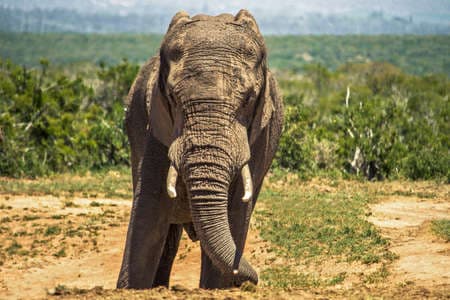
Navigate the best experiences, costs, and logistics for a combined safari adventure.
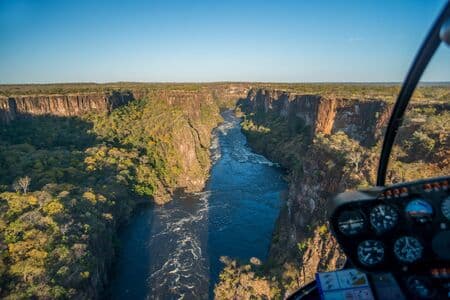
Get in touch with us and we'll get back to you as soon as possible.
Here's what sets us apart from the competition
We deliver exceptional experiences at fair, transparent prices, ensuring every journey offers genuine quality, comfort, and unforgettable adventure without unnecessary costs.
Your journey is crafted around your interests, pace, and travel style, giving you a custom-made adventure that feels authentic, meaningful, and entirely your own.
From planning to your final day of travel, our dedicated team is available to guide, assist, and ensure your trip runs smoothly and stress-free.
Find answers to common questions
Pack lightweight, neutral-coloured clothing, a warm layer for early-morning drives, sturdy shoes, sun protection, insect repellent, a good camera/binoculars, and any required medications or vaccinations after consulting your healthcare provider and local travel advice.
We work with a curated network of vetted lodges, camps, guides, and ground operators selected for local knowledge, safety standards, experience, and suitability to the traveller’s interests and budget.
Yes; itineraries can be tailored for wildlife photography, birding, family-focused activities, honeymooners, and adventure travel, with appropriate accommodations, vehicle options, and guide specialisations arranged on request.
Zimtrek specialises in safaris across Southern and East Africa, with core destinations including Zimbabwe, Botswana, Zambia, South Africa, Namibia, Kenya, and Tanzania.
Zimtrek designs tailor-made safaris including game drives, walking safaris, mobile tented camps, photographic safaris, and combined wildlife-and-cultural itineraries to suit solo travellers, couples, families, and small groups.
In This Article
Side-by-Side Country Comparison
Tailored Itineraries
Logistics Made Easy
A combined safari works best for travellers who want one trip to cover two very different styles of East African wildlife travel. Kenya usually gives you easier access to classic game-viewing areas, strong guiding traditions, and a smoother first safari experience. Tanzania adds scale: the Serengeti plains, the Ngorongoro Crater, and longer wilderness drives that feel less compressed. If you are planning a honeymoon, a family trip, or a once-in-a-lifetime wildlife holiday, the combination makes sense when you want more variety without sacrificing depth.
Quick rule of thumb: choose a combined trip if you want both the Masai Mara and Serengeti, or if you want to track migration timing across more than one region.
One itinerary can connect Kenya and Tanzania through a single, well-paced route.
The best-fit traveller is usually someone with at least seven nights, comfort with a few long drives or one or two short flights, and interest in comparing ecosystems rather than repeating the same safari area twice. Zimtrek can design these trips as private journeys or small-group style adventures, but the planning logic is the same: match season, park flow, and transfer time to your travel style. For travellers who prefer a slower rhythm, it is often smarter to do two iconic regions well than to rush through five.
The simplest way to compare the two is to think about access, scale, and pace. Kenya tends to be more compact, with shorter transfers between major wildlife areas such as the Masai Mara, Amboseli, and Lake Nakuru. Tanzania often feels broader and more immersive, with the Serengeti and Ngorongoro forming a larger circuit that rewards more time on the road or a mix of road and air travel.
| Factor | Kenya | Tanzania |
|---|---|---|
| Safari feel | Classic, efficient, easy to combine in fewer days | Broad, expansive, best for longer wilderness circuits |
| Signature areas | Masai Mara, Amboseli, Lake Nakuru | Serengeti, Ngorongoro Crater, Tarangire |
| Trip pace | Good for shorter, multi-stop itineraries | Better for longer stays and fly-in segments |
| Crowd management | Can feel busier in high-demand zones | More room to spread out across large areas |
If you are deciding where to spend more nights, Kenya is often the better starting point for first-time safari travellers who want easier logistics and strong predator action in a compact area. Tanzania is usually the better choice when the goal is the Great Migration experience or when you want a sense of space that builds through the whole trip. A combined route gives you both: Kenyan variety at the start and Tanzanian scale at the end, or the reverse depending on season.
Zimtrek planning insight: many travellers enjoy starting in Nairobi, moving through the Mara or Amboseli, then continuing into northern Tanzania via Namanga when the route and season align.
The best months depend on what you want to prioritise: migration drama, drier roads, fewer weather interruptions, or greener landscapes. For many combined trips, June to October is the most reliable window because game viewing is strong and roads are generally easier. January and February are also excellent, especially for clear skies, newborn wildlife, and concentrated animal activity after shorter rains.
| Month | Typical Safari Conditions | Best Use |
|---|---|---|
| Jan-Feb | Warm, relatively dry, good visibility | Calving areas, photography, shorter itineraries |
| Mar-May | Long rains, lower road predictability | Lower-season value and greener scenery |
| Jun-Oct | Dry, prime wildlife concentration | Migration viewing, classic first safaris |
| Nov-Dec | Short rains, varied conditions | Good shoulder-season option |
The Great Migration is not a fixed spectacle in one place, which is why timing matters. Herds move according to rainfall and grazing, so the Serengeti and Masai Mara do not behave like a calendar event. A practical planning approach is to connect your route to the likely location of the herds rather than assuming a single park will deliver the same show every month. That is one reason well-built itineraries are more useful than copying a generic package.
Avoid overcommitting to a single migration date. Wildlife movement shifts with rainfall, so build flexibility into your route and lodge choices.
A 7-day safari works best when you keep the route tight. In practice, that often means Nairobi, Masai Mara, and perhaps Amboseli or Lake Nakuru if transfers are efficient. A 10-day plan allows a better Kenya-to-Tanzania transition, usually with one internal flight or a carefully timed border crossing. A 14-day itinerary is where the combined-country idea really opens up, because you can include both the Mara and Serengeti without feeling rushed.
| Duration | Best Route Shape | Who It Suits |
|---|---|---|
| 7 days | Nairobi to Masai Mara, with one additional park or a return flight | First-timers, families, travellers on tighter schedules |
| 10 days | Kenya highlights plus northern Tanzania via Namanga | Couples, photographers, migration-focused travellers |
| 14 days | Mara, Serengeti, Ngorongoro, and one relaxed final stop | Travellers wanting depth and less transfer stress |
A useful planning rule is to spend more nights in fewer parks. One night in transit is rarely as valuable as an extra game drive in a high-quality reserve. If you are adding both countries, a combination of one major camp in Kenya and one or two in Tanzania usually delivers better value than packing in too many stops. Zimtrek often advises clients to balance travel days with wildlife days so the itinerary feels intentional rather than rushed.
For 2025 planning, combined safari pricing varies mainly by accommodation level, season, transport style, and how private the trip is. As a working guide, budget itineraries may start around US Dollar 350 to 500 per person per day, mid-range trips often sit around US Dollar 550 to 900, and premium itineraries can move from US Dollar 1,000 upward depending on fly-in transfers and lodge category. These figures are estimates, not fixed rates, because park fees, routing, and availability change.
Most of the price difference comes from transport and room type, not just the country. A well-planned road safari can be far more efficient than an unnecessarily complex fly-in route.
When comparing quotes, ask what is included: park fees, conservancy fees, road transfers, domestic flights, guide costs, game drives, and bottled water can all change the final number. A trip that looks cheaper at first may exclude key operational items. For American travellers in particular, it helps to compare on a per-day basis so you can see whether you are paying for premium logistics or simply more vehicle time. If you want a higher-end safari without overextending, travel in shoulder season and keep the itinerary focused.
The practical side of a combined trip usually comes down to three things: entry requirements, health preparation, and how you move across the border. Many itineraries use the Namanga crossing between Kenya and Tanzania, which is straightforward when the paperwork is prepared in advance and the vehicle handover is coordinated by the operator. The crossing itself is not the hard part; delays usually happen when passports, visas, or transport timing are not aligned.
| Logistics Item | What to Check Before Travel |
|---|---|
| Visa or eTA | Confirm the current entry process for both countries before booking flights |
| Health | Review yellow fever guidance if routing through affected countries and speak to a travel clinic |
| Border crossing | Allow time for immigration formalities and driver handover |
For clothing, neutral colours are the safest choice. Khaki, olive, brown, and beige work well, while bright white can get dusty quickly and very dark colours can attract heat and insects in some areas. Lightweight layers are better than bulky outfits because morning game drives can be cool and midday can be warm. A soft-shell jacket, sun protection, and a hat matter more than fashion choices. If you are crossing borders, keep documents, insurance details, and flight references in one easy-to-reach pouch so you do not waste time searching at checkpoints.
Practical checklist: passport, printed itinerary, visa documentation, clinic advice, travel insurance, and a charged phone for border and transfer coordination.
American travellers planning Kenya and Tanzania safaris should read official travel advice early, not after flights are booked. Government guidance can change, and it is best used as a planning layer rather than a scare tactic. The most useful approach is to check current destination pages, confirm where you will actually stay, and choose reputable ground handlers who coordinate airport pickups, transfers, and park movements clearly.
Risk is managed best through routing, timing, and trusted logistics - not through overcomplicated add-ons.
In safari areas, the main personal-safety risks are usually related to road travel, urban transfers, and being out of sync with local instructions, rather than to the wildlife drives themselves. That means your choice of operator matters. A well-run itinerary keeps airport meet-and-greet simple, uses daylight transfers where possible, and avoids unnecessary late-night movement. It also helps to carry digital and printed copies of documents, use hotel safes for extra passports or cards, and follow lodge guidance on moving between tents, vehicles, and common areas after dark.
The first common mistake is trying to fit too much into one trip. Kenya and Tanzania are best when you let them breathe. The second is booking purely by country name instead of by park sequence. A great route is built around actual driving time, seasonal movement, and lodge positioning. The third mistake is ignoring what the quote includes; a lower headline price can hide extra costs for flights, park fees, or long road transfers.
| Planning Mistake | Why It Hurts the Trip | Better Approach |
|---|---|---|
| Too many stops | Creates fatigue and reduces game-drive time | Limit the route to fewer, stronger areas |
| Wrong season choice | Misses the movement or road conditions you wanted | Match travel months to wildlife goals |
| Unclear inclusions | Unexpected costs appear during the trip | Request a line-by-line itinerary summary |
Another frequent oversight is packing clothes that work in town but not in the bush. Neutral layers, comfortable closed shoes, and a light waterproof top are more useful than formal outfits. Many travellers also assume border crossings will be quick if the distance is short. In reality, a short crossing can still take time if multiple travellers are crossing at the same hour. The safest plan is to build buffer time into your route so a delay does not affect lodge check-in or an afternoon game drive.
Packing well is one of the easiest ways to improve a safari. Choose breathable shirts, one warm layer for early drives, a hat, sunscreen, and sunglasses. A soft duffel is often easier than a hard suitcase in small safari vehicles and light aircraft. Keep your camera gear compact if possible, and carry chargers in your day bag rather than buried in checked luggage. If you are planning a fly-in segment, check baggage weight limits before you leave home so you are not forced to re-pack at the airport.
The old “white clothing” rule is often overstated. White is not banned, but it can show dust quickly; muted earth tones are usually more practical on safari.
For a combined Kenya and Tanzania route, the smartest wardrobe is versatile rather than bulky. Bring one outfit that handles a cold dawn drive, another that stays comfortable in midday heat, and one cleaner set for lodge dinners. If you are travelling in the dry season, dust becomes part of the experience, so quick-drying fabrics are valuable. If your trip includes lakeside or crater areas, pack a light rain shell in case of showers. These small choices make long safari days feel easier and reduce stress at checkpoints and transfers.
A Kenya and Tanzania safari is strongest when it is planned as a connected experience rather than two separate holidays stitched together. The real value comes from choosing the right season, keeping the route realistic, and matching transport style to your travel goals. Kenya offers momentum and convenience; Tanzania offers scale and immersion. Together, they create a richer safari story if you give the itinerary enough time.
If you want the most rewarding version of this trip, focus on the essentials: fewer moves, better timing, clear inclusions, and enough time for the landscapes to change. That is how travellers come home feeling they used their days well rather than simply checked off famous names. Zimtrek’s role is to turn that logic into a trip that feels smooth from the first airport pickup to the final game drive.
What is the best length for a combined safari? Seven days works for a focused route, but 10 to 14 days gives much better balance and more room for both countries.
Should I start in Kenya or Tanzania? It depends on season and flight routing, but many travellers start in Kenya for easier logistics and finish in Tanzania for a broader wilderness feel.
Is a border crossing necessary? Not always, but Namanga is a common overland link when the route includes both northern Kenya and northern Tanzania.
Are group safaris or private safaris better? Private trips are better for flexibility and pace control; group-style departures can work well for travellers who prefer shared costs and fixed schedules.
Get in touch with us and we'll get back to you as soon as possible.
Here's what sets us apart
We deliver exceptional experiences at fair, transparent prices, ensuring every journey offers genuine quality, comfort, and unforgettable adventure without unnecessary costs.
Your journey is crafted around your interests, pace, and travel style, giving you a custom-made adventure that feels authentic, meaningful, and entirely your own.
From planning to your final day of travel, our dedicated team is available to guide, assist, and ensure your trip runs smoothly and stress-free.
Don't just take our word for it
Keep reading