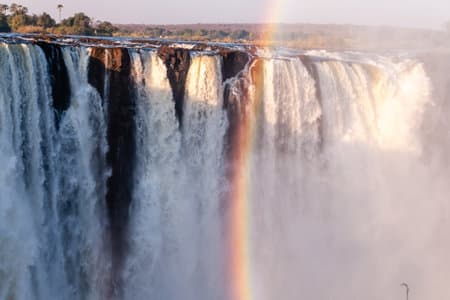
Navigate unique trekking experiences across Africa with practical tips and essential insights.
Image via 123RF
Get in touch with us and we'll get back to you as soon as possible.
Here's what sets us apart from the competition
We deliver exceptional experiences at fair, transparent prices, ensuring every journey offers genuine quality, comfort, and unforgettable adventure without unnecessary costs.
Your journey is crafted around your interests, pace, and travel style, giving you a custom-made adventure that feels authentic, meaningful, and entirely your own.
From planning to your final day of travel, our dedicated team is available to guide, assist, and ensure your trip runs smoothly and stress-free.
Find answers to common questions
Contact Zimtrek via the contact form or email with your travel dates, group size, interests, and budget; a consultant will propose options that match your travel style and logistics. They refine the plan through a few rounds of revisions until the itinerary meets your needs.
After finalising the itinerary, Zimtrek issues a detailed quote and booking terms; a deposit is typically required to secure reservations, with the balance due before travel as specified in the contract. Cancellation and amendment policies are provided upfront and may vary by supplier and booking.
Yes; Zimtrek designs itineraries for solo travellers, couples, families, and small groups, adjusting accommodation types, activities, and transport to suit different ages and group dynamics. Recommendations balance convenience, safety, and the desired experience.
Zimtrek coordinates transfers, internal flights, ground transport, local guides, and bookings with a curated network of lodges, camps, and operators to provide seamless logistics. Your consultant will outline transport options and timing in the itinerary and confirm provider details before booking.
Zimtrek specialises in Southern and East Africa, including Zimbabwe, Botswana, Zambia, South Africa, Namibia, Kenya, and Tanzania, and offers safaris, Victoria Falls visits, beach holidays, cultural trips, wildlife photography, and adventure activities. It combines these into multi-destination routes where logistics allow.
In This Article
Unique Routes
Choosing the Right Tour
Safety First
The best trekking trip is not the one with the most dramatic photos; it is the one that matches your fitness, time, interests, and tolerance for logistics. In Africa, that usually means deciding first whether you want a high-altitude challenge, a multi-day wilderness walk, or a softer route that blends scenery, culture, and wildlife. Zimtrek’s planning approach starts with those practical constraints, because the right route for a seasoned hiker from Johannesburg will look very different from a first-time trek for a couple visiting Southern Africa on a two-week holiday.
A good trekking tour should be built around your pace. If an itinerary feels packed from dawn to dusk, ask whether it still leaves room for acclimatisation, rest, and unplanned moments.
Start by ranking three things: physical demand, scenery, and cultural depth. If you want a challenge, mountain and escarpment routes will usually involve steeper gradients and longer walking days. If you want variety without overdoing the exertion, look for trails that combine lodge-to-lodge walking, river valleys, or guided nature walks with vehicle transfers between sections. For travellers who value local stories and community interaction, routes that pass through villages or historic footpaths are often more rewarding than remote summit-only itineraries.
| Trek style | Best for | What to check |
|---|---|---|
| High-altitude mountain trek | Experienced hikers seeking a physical challenge | Acclimatisation days, guide ratios, rescue access |
| Multi-day wilderness walk | Travelers wanting immersion in nature | Camp comfort, water logistics, daily walking hours |
| Culture-led trek | Curious visitors and mixed-ability groups | Village access, local guiding, interpretive value |
Fitness matters, but it is not the only filter. A traveller who exercises regularly may still struggle if the route includes altitude, heat, or uneven terrain. Ask for realistic daily walking distances, elevation gain, and terrain type rather than relying on the broad label of “easy” or “moderate.” Zimtrek often recommends itinerary pacing based on the least experienced person in the group, because a trip is enjoyable only when everyone can finish the days feeling capable rather than strained.
Preparation is mostly about reducing avoidable friction. In practical terms, that means building endurance, packing for changing conditions, and organising transport so the trek starts smoothly. For Southern Africa and wider African trekking circuits, travellers should assume that weather can shift quickly, temperatures can swing between exposed ridges and shaded valleys, and supply points may be limited once a route begins.
Train on hills, stairs, and uneven ground rather than only flat roads. If your trek involves consecutive walking days, practice back-to-back hikes on weekends so you understand how your body recovers. Pack footwear that is already broken in, not new boots that you hope will settle during the trip. A blister on day one can affect the rest of the itinerary.
A realistic daily walking window for many guided treks, depending on pace and terrain
For packing, think in layers rather than outfits. Lightweight base layers, a windproof outer layer, a warm mid-layer, sun protection, a refillable water bottle, and blister care supplies are more useful than excess clothing. On more remote routes, add a headlamp, spare batteries, power bank, and a dry bag for electronics. If your trek includes porters or support vehicles, confirm weight limits so your bag is appropriately sized from the beginning.
Do not assume mobile signal will be reliable on trail. Download maps, lodge details, and emergency contacts before departure, especially on routes that move through valleys or remote conservancies.
It also helps to coordinate the non-walking details early. Confirm transfer times, border crossings if the itinerary spans more than one country, and whether meals are provided between trail sections. Small planning gaps create the biggest stress on trekking trips, not the walking itself.
Africa’s trekking appeal lies in variety. Some routes are known for volcanic slopes and altitude, others for forested ridges, river corridors, or culturally important pathways used for generations. For travellers planning with Zimtrek, the key is to match the route type to the experience you want rather than chasing the most famous name. A well-designed trek across Southern Africa can be as memorable for its landscapes and guiding as for the walking itself.
| Route type | Typical appeal | Planning note |
|---|---|---|
| Mountaintop ascent | Big views, altitude, a clear finish line | Prioritise acclimatisation and weather windows |
| Ridge-and-valley walking | Changing scenery with moderate effort | Check trail length and support access |
| Community-linked trail | Culture, storytelling, local hospitality | Choose operators that work directly with residents |
In Southern Africa, trekkers often respond well to routes that combine physical movement with broader travel experiences: a walking section followed by a lodge stay, a scenic drive, or time near a national park. That structure works especially well for families, mixed-ability groups, and travellers who want a more comfortable rhythm. It also allows you to absorb the region’s contrasts: dry granite landscapes, river systems, high plateaus, and remote settlements where local knowledge changes the whole journey.
If you want the hardest physical challenge, choose a route with sustained elevation, limited vehicle support, and clear summit goals. If you want a balanced first trek, choose a moderate route with lodge nights or staged walking days. If your priority is cultural connection, pick a trail where the guide can interpret local history, land use, and daily life, not just point out plants and rocks. Zimtrek usually recommends the second or third option for travellers who want depth without turning the holiday into an endurance test.
The most rewarding treks are often the ones with built-in variety: one demanding day, one scenic transfer, and one softer walk that leaves room to enjoy the setting.
The most common mistake is underestimating how route conditions differ from standard hiking at home. Travellers sometimes focus on total distance and ignore elevation, heat, surface stability, or the time spent carrying water. Another frequent error is overpacking. Heavy bags reduce comfort, slow the group, and make daily walking more tiring than necessary. A third mistake is booking based only on the destination name, without checking whether the itinerary actually includes the level of support and pacing you need.
A fourth issue is poor sequencing. Some travellers place a demanding trek immediately after a long-haul flight or a multi-city transfer. That usually means they arrive tired, dehydrated, and less ready for the first walking day. Good planning leaves breathing room at the start of the trip, especially if the route includes altitude or remote travel legs. It also avoids the frustration of rushing from one experience to another without time to enjoy either.
If a trek description does not state daily distances, elevation gain, and accommodation style, ask for them. Vague itineraries make it difficult to judge whether the trip is right for you.
Good safety planning is practical rather than dramatic. It starts with a reliable guide, a clear route briefing, and honest communication about your health and experience. Treks in Africa can involve heat, altitude, wildlife zones, remote access roads, and changing trail conditions, so a responsible operator will build in contingency time and carry the right communication tools for the route.
Before departure, confirm the operator’s approach to emergencies: how they contact support vehicles, what happens if the weather changes, and whether they have local rescue contacts where relevant. You should also review food and water arrangements, since hydration is often the first issue on physically demanding walks. Use sun protection early, not after you already feel the effect of a long day outside.
Before every walk, confirm pace, route limits, regroup points, and emergency contacts
The most meaningful trekking trips leave space for human connection. That might mean learning how a route has been used historically, buying locally made food or crafts where appropriate, or simply walking with a guide who can explain the landscape through local memory rather than guidebook language. Community interaction should feel respectful and mutual, not performative.
When selecting a trek, ask how local people benefit from the experience. Responsible operators are usually able to explain whether they use resident guides, source services locally, or work with communities along the route. This matters because trekking can be one of the few travel styles where visitors move slowly enough to listen, observe, and ask questions in a way that benefits both sides. For many travellers, those conversations become the part of the journey they remember longest.
Choose operators that treat community engagement as part of the itinerary, not as a last-minute add-on. That usually leads to more authentic experiences and better local support.
Get in touch with us and we'll get back to you as soon as possible.
Here's what sets us apart
We deliver exceptional experiences at fair, transparent prices, ensuring every journey offers genuine quality, comfort, and unforgettable adventure without unnecessary costs.
Your journey is crafted around your interests, pace, and travel style, giving you a custom-made adventure that feels authentic, meaningful, and entirely your own.
From planning to your final day of travel, our dedicated team is available to guide, assist, and ensure your trip runs smoothly and stress-free.
Don't just take our word for it
Keep reading