Discover when to plan your safari for optimal wildlife viewing and unforgettable experiences.
Get in touch with us and we'll get back to you as soon as possible.
Here's what sets us apart from the competition
We deliver exceptional experiences at fair, transparent prices, ensuring every journey offers genuine quality, comfort, and unforgettable adventure without unnecessary costs.
Your journey is crafted around your interests, pace, and travel style, giving you a custom-made adventure that feels authentic, meaningful, and entirely your own.
From planning to your final day of travel, our dedicated team is available to guide, assist, and ensure your trip runs smoothly and stress-free.
Find answers to common questions
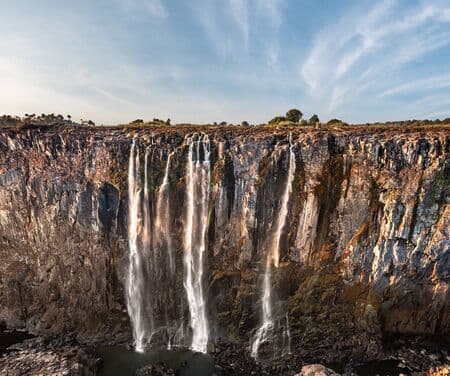
The falls are often most dramatic in the months following the rainy season, approximately February to May, when river levels are high, though flow varies year to year and sections of the falls can be affected by seasonal changes.
The dry season (typically May to October) usually offers the best wildlife viewing as animals concentrate around water sources and vegetation is sparser, improving visibility; specific peak months vary by country and ecosystem.
Birdwatching is excellent during the rainy and post-rainy seasons (roughly October to April) when migrant and breeding species are present and many birds are displaying; timing can vary by species and region.
Consider shoulder seasons (just before or after peak dry season) for fewer visitors while still good wildlife viewing and pleasant weather; tailor timing to your target country and activities, as peak periods differ between national parks and coastal areas.
June to October and late December to February are commonly preferred for beach holidays due to drier, sunnier conditions and calmer seas, while the long rains (March-May) and short rains (October-December) may bring heavier showers.
In This Article
Seasonal Overview
Wildlife Migration Patterns
Weather Considerations
If you are trying to decide on the best time to go on an African safari, start with the seasons rather than the calendar months alone. Across Southern Africa, safari conditions are shaped by the alternation between the dry season and the green or rainy season, but those patterns do not behave exactly the same way everywhere. In Botswana and Namibia, the dry months usually bring thinner vegetation and animals clustering around permanent water, which can make game easier to find. In Zimbabwe, South Africa, and Zambia, the same dry period often means clear skies, cooler mornings, and very good visibility in national parks and private reserves. By contrast, the green season transforms landscapes, birdlife, and photographic conditions, even if wildlife can be more dispersed.
Zimtrek’s planning advantage is that seasonality is not treated as one-size-fits-all. A July safari in Hwange, a November trip to the Okavango region, and a March journey through South Africa each call for different lodge choices, road transfer timing, and activity planning.
For travellers, the most useful way to think about seasonality is in terms of trade-offs. Dry months often increase the odds of concentrated wildlife viewing, but they can also be busier and more expensive in popular destinations. Green months may be quieter and better for photography, yet some areas have more difficult road conditions and thicker grass. That is why experienced safari planners look at the whole trip shape, not only the headline destination. A well-designed itinerary balances wildlife density, weather comfort, and logistics so you are not booking a lodge that looks ideal on paper but is poorly matched to the month you are travelling.
| Season | Typical Conditions | Safari Implication |
|---|---|---|
| Dry season | Less rainfall, thinner vegetation, cooler mornings | Wildlife tends to gather near water and sightings are often easier |
| Shoulder season | Mixed weather, fewer crowds, variable game movement | Good value and flexible routing, especially for custom trips |
| Green season | Lush vegetation, storms or showers, strong birding | Excellent for scenery, photography, and lower-season pricing |
The key is not just choosing a season, but choosing the right destination for that season. In Southern Africa, this matters more than many first-time travellers expect. For example, a river-front camp in Zambia can be outstanding late in the dry months because animals move along the river system, while a lodge deeper in a dense area may be harder to work with if grasses are tall after early rains. This is why Zimtrek tends to match safari timing with specific wildlife corridors, access routes, and the style of viewing you want, whether that is vehicle-based game drives, walking safaris, or a combination of both.
For many travellers, the best time to go on an African safari is the period when wildlife viewing becomes most reliable. In Southern Africa, that often means the latter part of the dry season, when game concentrates around rivers, pans, and permanent waterholes. This pattern is especially useful in places such as Botswana’s Chobe system, Zimbabwe’s Hwange, and parts of South Africa’s Kruger region, where water availability strongly influences animal movement. Rather than thinking only about where animals live, think about where they must go to drink, cool down, or find fresh grazing.
Often offers the most concentrated wildlife viewing in Southern Africa
This does not mean the rest of the year is poor for sightings. It means that the style of safari changes. In the dry season, you may spend less time searching because the landscape is more open. In the greener months, you may see more dramatic scenery, more birds, and more young animals, but you may need more patience because wildlife disperses more widely. Travellers who enjoy photography often appreciate both ends of the spectrum for different reasons: dry season for clearer lines of sight, and green season for colour and atmosphere.
If your priority is maximum game-viewing efficiency, choose a safari window that overlaps with the driest part of the region you are visiting, not just the driest month on a generic Africa calendar.
The practical planning point here is that peak wildlife viewing is not identical across all safari countries. Botswana’s safari rhythm can be very different from South Africa’s lowveld or Zimbabwe’s park systems. Even within one country, the timing can shift by area. Zimtrek’s destination pages help travellers compare safari areas that behave differently across the year, so your trip is built around where conditions are strongest for the month you have available. That approach matters if you are combining a few nights in one reserve with a riverfront or desert landscape elsewhere, because the “best” timing may be different at each stop.
| Viewing Condition | What It Usually Means | Best Fit For |
|---|---|---|
| Thin vegetation | Animals are easier to spot at distance | First-time safari travellers and photographers |
| Water concentration | Higher chances of repeated sightings at the same points | Travellers who prefer structured game drives |
| Green season movement | Animals spread out but active in richer habitats | Return visitors and birdwatchers |
When travellers mention the Great Migration, they usually mean the enormous movement of wildebeest and other grazing animals through the Serengeti-Mara ecosystem. It is one of Africa’s most talked-about wildlife events, but the timing is not fixed to a single month. River crossings, calving, and grazing movements all happen in different parts of the year and are influenced by rainfall and grass growth. If you are considering East Africa as part of a wider safari conversation, the migration is one reason timing matters so much.
For Southern Africa safari planning, the important lesson is broader than one event: large-scale animal movement is always seasonal, and the best time to travel depends on the natural cycle of the place you are visiting. That is why experienced planners avoid describing safari timing as if one period were universally superior. A traveller interested in movement-driven wildlife should look at migration patterns, breeding seasons, and local grazing cycles together. The most rewarding trips are often those that are matched to a specific ecological event rather than just a destination name.
Migration timing can shift with rainfall, so it is wiser to plan for a window rather than a single exact week. Build flexibility into your itinerary if witnessing movement is a top priority.
For travellers who want a similar sense of movement without focusing only on one famous spectacle, Southern Africa offers strong seasonal experiences in its own right. Elephant concentrations near rivers, zebra and antelope dispersal after rainfall, and predator activity around water-rich systems can all create highly rewarding viewing windows. In other words, you do not need to chase one headline migration to have a trip shaped by wildlife rhythm. You need to understand which ecological cycle is strongest in the region you want to visit.
Weather is one of the biggest factors influencing safari comfort, visibility, and logistics, yet it is often reduced to a simple question of hot versus cool. In reality, safari weather affects road access, game-drive timing, photography, and even how long animals stay in open areas. In Southern Africa, the dry winter months usually bring clear mornings and crisp evenings, while the warmer months can bring thunderstorms, humidity, and lush growth. Neither is inherently better; each creates a different kind of safari.
Cooler weather can make long game drives more comfortable, particularly when dawn departures are involved. It can also encourage wildlife activity earlier in the day before temperatures rise. Hotter months can be more challenging in the middle of the day, but they also create dramatic skies, strong sunsets, and excellent conditions for travellers who value atmosphere and photography. In some regions, summer rain is brief and localized, which means you may still have long periods of good safari time even in the green season. The real issue is not whether it rains at all, but how that rain interacts with roads, vegetation, and the type of lodge or camp you choose.
| Weather Pattern | Typical Safari Effect | Practical Planning Note |
|---|---|---|
| Cool, dry mornings | Better comfort for early game drives and easier animal movement | Pack layers and a warm jacket for dawn departures |
| Afternoon storms | May shorten drives or change route plans | Keep one flexible afternoon in the schedule when possible |
| High humidity | Can feel more tiring, especially on full-day itineraries | Choose lodges with good cooling and shorter transfer times |
This is where itinerary design becomes more important than generic advice. A safari in July around Victoria Falls and nearby wildlife areas will have different weather implications than a November combination of delta landscapes and river safaris. Zimtrek’s destination knowledge helps travellers account for these variations so they are not surprised by transfer conditions or activity timing. If you are sensitive to heat, a cooler region or a lodge with shaded vehicles and shorter drive loops may suit you better than an itinerary focused on long, open-road game drives.
Weather planning is not just about comfort. It also affects how much time you spend actively viewing animals versus sitting through difficult road conditions or midday heat.
Different wildlife experiences peak at different times of year, which is why the best safari timing depends on what you most want to see. If elephants are a priority, river systems and dry-season waterpoints often deliver excellent opportunities. If you are drawn to predators, the thinner vegetation of the dry months can improve visibility, especially when combined with early-start game drives. If birds are high on your list, the green season often brings migrants, nesting activity, and more colour in the landscape.
For mammal sightings, many travellers prefer the drier part of the year because open bush and scarce water create more predictable movement. For young animals and dramatic calving moments, the months after early rains can be rewarding, though the exact timing depends on local rainfall. For birders, the wetter months in Southern Africa can be especially productive, with species activity increasing and the bush becoming alive with nesting, calls, and movement. The best choice depends on whether you value clarity, action, birds, or scenery most.
| Wildlife Priority | Often Better Season | Why It Works |
|---|---|---|
| Elephants and large mammals | Dry season | Animals cluster near water and are easier to track |
| Birdwatching | Green season | Migrants, breeding activity, and active breeding plumage |
| Predator visibility | Late dry season | Shorter grass and better line of sight |
| Photography and landscapes | Shoulder or green season | Cloud drama, colour, and softer light |
A good safari plan should therefore begin with your wildlife priorities rather than with price alone. If you are travelling from Zimbabwe, South Africa, or elsewhere in the region for a short break, the ideal timing may be a focused three- to five-night itinerary around one destination with the strongest seasonal conditions. If you are flying in from farther away, it can be worth building a longer route that pairs a wildlife reserve with a river or falls experience, giving you different seasonal textures in one journey. That is where custom planning matters: the right month, the right park, and the right lodging style make a far bigger difference than most travellers expect.
For broader destination comparison, Zimtrek’s Popular Destinations page is useful when you want to see how different safari regions fit into a single Southern Africa trip. It helps travellers compare timing, access, and the style of experience across key safari areas before they commit to dates.
Packing for safari is easiest when it follows the season rather than a generic packing list. For dry season travel, the essentials are layers, a warm fleece or jacket for early departures, neutral-coloured clothing, sunglasses, and good closed shoes. The mornings can be surprisingly cool, even when the afternoons are warm. For green season travel, add a light rain shell, quick-dry clothing, and a small waterproof cover for camera gear or binoculars. Dust and sun protection remain important year-round, because even wet months can include long stretches of strong sunlight.
A compact layering strategy works better than heavy clothing. Safari vehicles, air transfers, and lodge lounges can all feel different in temperature across one day.
It also helps to pack with the transfer structure in mind. Fly-in safaris often reward lighter bags because many small aircraft routes have stricter luggage limits, while road-based itineraries give you slightly more freedom but can be affected by weather and road dust. If you are combining multiple regions, choose items that dry quickly and can be worn in layers rather than packing separate outfits for every stop. This is one area where travellers often overpack, especially if they are trying to prepare for every possible climate at once.
One of the most effective ways to decide when to travel is to think about what you want to pair with safari. A wildlife-focused trip can be stronger when combined with a river, delta, or falls experience that works well in the same season. For example, a dry-season safari can be paired with a water-based or scenic stop, while a green-season trip may suit photography, cultural encounters, and quieter lodge time. The right combination depends on whether you want the whole itinerary to feel adventurous, restorative, or varied.
Zimtrek designs Southern Africa itineraries that can link safari with scenic and leisure components, but the season needs to support the route. A combination that looks straightforward on a map may become less appealing if roads are slow, a border crossing adds stress, or a remote lodge is less accessible in the wetter months. Good planning accounts for those realities and keeps the trip smooth rather than simply ambitious.
Southern Africa is not a single safari zone. Botswana often rewards visitors who match travel timing to river and delta systems. Zimbabwe can be excellent in dry months when major parks concentrate wildlife around water. Namibia often suits travellers who appreciate dramatic landscapes, clearer road conditions, and seasonal contrasts between desert and wildlife areas. South Africa offers a broad range of options, so the best timing depends on whether you are focused on private reserves, national parks, or a mixed trip.
Because of these differences, the best time to go on an African safari is really the best time for a particular region and itinerary style. That is why travellers should avoid copying a single country’s safari calendar into every destination. What works for one park can be less effective for another only a few hundred kilometres away.
Seasonal planning is not only about wildlife and weather. Local holidays, school breaks, and event periods can influence lodge availability, flight pricing, and crowd levels. In peak travel windows, some well-known camps and regional flight routes sell out earlier than travellers expect, especially when a holiday period overlaps with dry-season demand. If you want quieter lodges and more flexible routing, the shoulder season can be a smart option.
For regional African travellers, school holiday timing can be especially important because it affects both availability and pacing. For international visitors, the best approach is to work backward from fixed travel dates and then choose the region where those dates create the strongest safari conditions. If you have flexibility, Zimtrek can shape a route around the month that best balances wildlife, comfort, and logistics rather than forcing your trip into a schedule that does not suit the season.
Get in touch with us and we'll get back to you as soon as possible.
Here's what sets us apart
We deliver exceptional experiences at fair, transparent prices, ensuring every journey offers genuine quality, comfort, and unforgettable adventure without unnecessary costs.
Your journey is crafted around your interests, pace, and travel style, giving you a custom-made adventure that feels authentic, meaningful, and entirely your own.
From planning to your final day of travel, our dedicated team is available to guide, assist, and ensure your trip runs smoothly and stress-free.
Don't just take our word for it
Keep reading