Discover seasonal highlights, wildlife movements, and optimal conditions for your safari adventure.
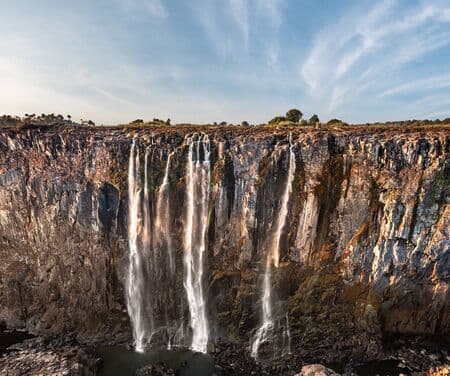
Image via 123RF
Get in touch with us and we'll get back to you as soon as possible.
Here's what sets us apart from the competition
We deliver exceptional experiences at fair, transparent prices, ensuring every journey offers genuine quality, comfort, and unforgettable adventure without unnecessary costs.
Your journey is crafted around your interests, pace, and travel style, giving you a custom-made adventure that feels authentic, meaningful, and entirely your own.
From planning to your final day of travel, our dedicated team is available to guide, assist, and ensure your trip runs smoothly and stress-free.
Find answers to common questions
The falls are often most dramatic in the months following the rainy season, approximately February to May, when river levels are high, though flow varies year to year and sections of the falls can be affected by seasonal changes.
The dry season (typically May to October) usually offers the best wildlife viewing as animals concentrate around water sources and vegetation is sparser, improving visibility; specific peak months vary by country and ecosystem.
Birdwatching is excellent during the rainy and post-rainy seasons (roughly October to April) when migrant and breeding species are present and many birds are displaying; timing can vary by species and region.
Consider shoulder seasons (just before or after peak dry season) for fewer visitors while still good wildlife viewing and pleasant weather; tailor timing to your target country and activities, as peak periods differ between national parks and coastal areas.
June to October and late December to February are commonly preferred for beach holidays due to drier, sunnier conditions and calmer seas, while the long rains (March-May) and short rains (October-December) may bring heavier showers.
In This Article
Seasonal Insights
Wildlife Movements
Travel Tips
Timing a safari in South Africa is less about finding one universally “best” month and more about matching the season to the experience you want. The country’s safari regions stretch across different climate zones, so conditions in Kruger, KwaZulu-Natal, the Eastern Cape, and the private reserves near Johannesburg can feel quite different even in the same week. For most travellers, the key decision is whether they want drier months with easier game viewing or greener months with dramatic scenery, better birding, and fewer crowds. Zimtrek often frames this as a choice between visibility and atmosphere, because both have value depending on your travel style.
South Africa’s seasons are opposite to the Northern Hemisphere, which matters for international planners. Summer runs roughly from November to February, bringing warm temperatures, afternoon thunderstorms in many safari areas, and vibrant vegetation. Winter runs from May to August, and in many wildlife regions this is the classic dry season, when animals gather around rivers, pans, and waterholes. Spring and autumn act as shoulder seasons, often offering a balance of pleasant temperatures, moderate rates, and less competition for preferred lodge dates. That said, “shoulder season” does not mean a compromise in quality; in South Africa it can be one of the smartest times to travel if you want good value and solid game-viewing conditions. Private lodges play a crucial role in this context.
Main safari seasons most travellers plan around: the dry winter period and the wet summer period.
Weather also shapes what you do between game drives. In cooler months, early-morning departures can be brisk, especially in open vehicles, but visibility is often excellent because the bush is less dense. In the warmer months, mornings are still productive, but the heat later in the day may encourage slower, more relaxed itineraries, often with pool time or shorter game drives. If you are visiting with children, shooting wildlife photography, or planning a first safari, these seasonal differences can strongly affect comfort and pace.
A useful way to think about South Africa safari planning is to divide the year into two broad behavioural patterns in wildlife. During drier months, herbivores and predators tend to be more concentrated around reliable water and grazing, which improves the odds of seeing more activity in a smaller area. During wetter months, animals disperse more widely because water and food are plentiful, but the landscape becomes strikingly green and many species calve during or just after the rains. Zimtrek’s planning approach uses these patterns to align each itinerary with the guest’s main interest, whether that is photography, classic Big Five game viewing, or a more scenic, less crowded trip.
For many safari travellers, the dry season is the most reliable time for game viewing in South Africa. In places like Kruger National Park and surrounding private reserves, the period from roughly May to September usually brings thinner vegetation, fewer water sources, and cooler daytime temperatures. These conditions make it easier to spot animals from a distance and to track movement around rivers and waterholes. If your priority is seeing a broad range of wildlife in a shorter stay, this is often the season that delivers the most straightforward safari rhythm.
In the dry months, the bush is less dense, so even a single game drive can cover more ground visually. This is especially useful for first-time visitors who want a clear, confidence-building safari experience.
Winter in South Africa’s safari regions also tends to have more comfortable midday temperatures. That makes it easier to enjoy two drives a day without the heavy humidity that can come with summer. The trade-off is that early mornings and late evenings can be cold enough to warrant a fleece, scarf, and closed shoes, especially in open vehicles. Travellers sometimes overlook this detail and pack only for “Africa heat,” but comfort in the vehicle matters just as much as comfort at the lodge. A well-prepared guest often enjoys the dry season more than someone who arrives underpacked for cool dawn departures.
| Dry Season Window | Typical Conditions | Why It Works for Safari |
|---|---|---|
| May to June | Cooling temperatures, thinning vegetation, excellent visibility | A strong transition into classic game-viewing conditions |
| July to August | Cold mornings, very dry bush, concentrated wildlife | Often ideal for finding predators and large herbivores near water |
| September to early October | Hotter, still dry, increasingly active wildlife around remaining water | Strong viewing before the summer rains return |
The dry season is especially attractive if your itinerary is short. A two- or three-night safari has a better chance of feeling rich and varied when animals are concentrated. This is one reason Zimtrek often recommends winter dates for travellers combining a South Africa safari with other destinations in the region. You spend less time searching and more time observing. It also helps with route planning, because wildlife movement is often easier to anticipate around established water sources and drainage lines.
Dry season demand rises around school holidays and long weekends, especially in popular private reserves. Booking earlier helps secure the lodge style and room category that fit your itinerary best.
South Africa’s wet season, usually from around November to March in many safari areas, changes the feel of a trip in a very different way. Instead of sparse vegetation and dusty tracks, you get greener landscapes, dramatic skies, and a fuller, more textured bush experience. For travellers who value scenery, photography, and a sense of abundance, this is a compelling time to visit. The green season is also particularly rewarding for birders, since migrant species arrive and resident birds are often in breeding plumage or displaying active behaviour.
One of the most appealing aspects of the wet season is the chance to see young animals. Calving and birthing patterns vary by species and region, but the broader result is that you may encounter more juveniles, active family groups, and predator-prey interaction. That does not mean every drive will be full of dramatic action, but it does mean the bush is often more visually lively. For travellers with a camera, the combination of green backdrops, storm light, and water reflections can create far more interesting images than the dusty tones of winter.
There are practical trade-offs, however. Summer heat can be intense in some low-lying safari areas, and afternoon rain showers may shorten drives or require more flexible scheduling. Tracks can be wet, and some remote areas may feel less predictable in terms of movement because animals are more dispersed. Still, if your main goal is not just to “tick off” wildlife but to enjoy a more immersive African landscape, the wet season has real appeal. Many repeat visitors deliberately choose this period after first visiting in winter, because it shows a completely different side of the same reserve.
A good fit for photographers, birders, and travellers who prefer scenery and fewer crowds over maximum animal concentration.
The wet season can also be a practical choice for travellers seeking more favourable lodge availability. While South Africa’s most established safari areas remain popular year-round, the summer months often provide more room to find preferred dates, especially outside of peak holiday periods. That flexibility can matter if you want a specific suite, a family unit, or a shorter lead time. Zimtrek frequently uses this season to create itineraries that prioritise comfort, slower pacing, and strong value without reducing the quality of the safari itself.
Because weather patterns vary by region, it is important not to treat the wet season as one single experience. Coastal and eastern areas may receive more summer rain than inland game reserves, while some safari destinations are warm but still manageable for much of the season. A locally informed plan helps avoid the common mistake of assuming all South African safari regions behave the same way. They do not, and that is why destination choice matters as much as timing.
Wildlife movement is one of the most useful ways to think about safari timing because animals respond to water, food, temperature, and breeding cycles rather than to a human calendar. In South Africa, many species shift their daily and seasonal ranges depending on where grazing is strongest and where water remains available. This means your likely sightings can improve or change substantially from month to month, even within the same park or concession.
During the dry season, general movement often becomes more concentrated. Plains game may remain close to rivers or waterholes for longer periods, while predators benefit from the predictability of prey routes. In the wet season, the same animals may spread out, making sightings feel less concentrated but often more natural and varied. For visitors, this difference is important: if you are after a classic search-and-view safari, winter is often more efficient. If you want a broader ecological picture, summer can be more rewarding.
| Season | Typical Wildlife Pattern | Traveller Takeaway |
|---|---|---|
| Winter dry season | Animals cluster around remaining water and open areas | Best for efficient game viewing and predator tracking |
| Late spring | Hotter weather and transitional movement as rains approach | Good balance of visibility and increasing activity |
| Summer wet season | Wider dispersal, breeding behaviour, more birdlife | Best for scenery, photography, and a greener atmosphere |
For safari planning, the key is to recognise that “wildlife movements” are not only about large mammals. Bird movement, breeding displays, and the presence of juveniles all change with rainfall and temperature. If you are a photographer or nature enthusiast, these changes can be just as important as the headline animals. A short trip in the right season can therefore feel very different from another trip taken three months later, even in the same reserve.
Zimtrek’s advantage lies in translating these seasonal patterns into practical planning decisions. Rather than simply telling travellers that winter is “better,” the more useful question is: better for what? More concentrated wildlife? More comfort? Better photography? Lower crowd pressure? Once that is clear, the right month becomes easier to choose.
The best safari month in South Africa depends partly on what you want to do once you arrive. Game drives are the obvious anchor, but different seasons support different styles of travel. In the dry season, longer and more productive drives often suit travellers who want to maximise wildlife viewing in a short window. In the wet season, many guests prefer a slower rhythm that includes photography, birding, and more time at the lodge between excursions. The right season therefore depends not just on the animals but on how you like to travel.
Winter and early spring are often the strongest months for classic game drives, especially if you are visiting Kruger-adjacent reserves or private concessions with open-vehicle safaris. The more open the bush, the easier it is to follow tracks, spot resting predators, and watch mixed herds moving between feeding areas. This is also a reliable period for guided walks in some areas, although the exact availability depends on lodge and reserve rules. If you enjoy photography, the softer winter light can be very attractive in early morning and late afternoon, particularly when the foliage is not blocking the view.
Summer brings a different menu of experiences. Because the landscape is greener and the weather warmer, travellers may enjoy shorter game drives, more birdwatching, and time spent enjoying the setting itself rather than simply covering ground. Storm clouds can create dramatic skies, and after rainfall you may see animals using newly refreshed water sources. Some guests also value this season because it feels quieter and more spacious, with fewer vehicles on the same sighting. That can make the safari experience feel less pressured and more personal.
If your priority is photography, think beyond wildlife counts. Green season can produce far better colour, depth, and reflections, while dry season often gives cleaner subject separation and easier tracking.
Birding is especially rewarding in the warmer months, when many migratory species arrive and breeding activity increases. Travellers who enjoy smaller details-nesting behaviour, calling birds, and insects that signal a healthy ecosystem-may find summer richer than winter. This is one reason Zimtrek often recommends matching safari timing to interest rather than following a one-size-fits-all rule. A birder, a first-time family traveller, and a wildlife photographer may all make different choices for the same reserve.
Logistics can matter as much as wildlife when choosing the best time to travel. South Africa is well connected, but safari planning still involves seasonal questions about availability, road conditions, packing, and how your transfer times may change with weather. During the dry season, roads into and within many safari areas are typically easier to manage, and game-drive routes are less likely to be affected by rain. That can make it simpler to combine a safari with city stays, coastal extensions, or self-drive segments. In contrast, the wet season may require a little more flexibility, especially if your itinerary includes remote lodges or long road transfers.
Accommodation strategy also changes with the season. Peak winter dates can book up early, particularly in high-demand private reserves and on school-holiday windows. If you need family rooms, interleading suites, or a specific camp type, planning ahead becomes more important than during the quieter months. Summer can offer more choice, but it is still wise to avoid assuming last-minute availability in the most established areas. A well-designed safari is not just about being in the right month; it is about securing the right lodge in the right location for that month.
The most suitable lodges and room categories often sell first during winter and school-holiday periods.
Packing deserves more attention than many travellers give it. In winter, layers are essential because dawn drives can be cold even when the afternoon is sunny. In summer, light breathable clothing, rain protection, and sun coverage matter more. Neutral colours remain the simplest option, and good footwear is useful whether you are staying in a luxury lodge or a more rustic tented camp. If you plan to travel between regions, remember that South Africa’s safari areas can have different microclimates, so a single packing list may not suit every stop.
The South African Weather Service is a useful source when checking broader seasonal patterns, but local conditions can still vary from one reserve to another. That is why Zimtrek prefers to build itineraries around specific camps and road transfers rather than around a general assumption about “the country’s weather.” A travel plan that looks good on paper may become less comfortable in practice if it ignores daily temperature swings, afternoon rainfall, or flight timing into regional airports.
| Planning Factor | Dry Season Implication | Wet Season Implication |
|---|---|---|
| Lodge availability | Book earlier, especially for popular reserves | More flexibility, but still plan ahead for special room types |
| Road transfers | Typically smoother and more predictable | Allow extra time in case of rain or slower road conditions |
| Packing | Warm layers for mornings and evenings | Rain layer, sun protection, quick-dry clothing |
One of the biggest advantages of planning a safari in South Africa is the chance to combine wildlife with other experiences in the same trip. The best time for that combination depends on whether you want coastal weather, wine country, city time, or a more nature-focused itinerary. For many travellers, winter is ideal for pairing a safari with Cape Town, because the inland safari regions are in strong viewing season while the Western Cape has its own attractive rhythm. Others prefer summer, when a safari can be paired with coastal or garden-route travel and a greener overall landscape.
When Zimtrek designs a South Africa itinerary, seasonality influences not just the safari dates but also the sequencing of stops. For example, a traveller might begin with a few nights in the Kruger region, then continue to a relaxed coastal stay, or start in the Cape and end with game viewing. The order matters because it affects flight connections, energy levels, and how much weather risk is introduced into the trip. A smart itinerary uses the season as a strength rather than treating it as a limitation.
The strongest itineraries usually do one thing well: they match the season to the experience first, then build in the add-ons that enhance it, rather than forcing too many unrelated stops into the same trip.
South Africa is also a good choice for travellers who want flexibility in budget and pace. A green-season safari can sometimes pair well with premium lodges that have better date availability, while dry-season travel may justify a more efficient, shorter itinerary with a higher concentration of wildlife activity. Families, honeymooners, photographers, and repeat safari guests often make different decisions here. Some want the easiest logistics possible, while others deliberately prioritise scenery or quieter travel periods. The best itinerary reflects that difference clearly.
If you are deciding when to go, think of the trip as a combination of season, region, and travel style. That is the formula Zimtrek uses to turn a general safari idea into a practical plan. The result is not just a date on the calendar, but a trip that fits how you want to experience South Africa.
There is no single month that works best for every traveller, but there is usually a season that works best for your priorities. If you want the clearest wildlife viewing and the most predictable safari rhythm, the dry winter months are often the strongest choice. If you prefer green landscapes, more birds, and a softer, more atmospheric experience, the wet season can be a rewarding alternative. Shoulder months can offer a practical middle ground, especially for travellers who want a good balance of comfort, availability, and value.
The most useful question is not simply “when is the best time to visit?” but “what kind of safari do I want to have?” That answer will point you toward the right season, region, lodge style, and trip length. For South Africa, timing really does shape the story your safari tells. Whether you are focused on wildlife concentration, photographic colour, or a more relaxed holiday flow, a thoughtful seasonal plan will make the trip stronger from the start.
For travellers who want expert help aligning dates with destinations and lodge options, Zimtrek can shape a route around the season rather than against it. That approach keeps the planning simple and makes the final itinerary far more rewarding on the ground.
Get in touch with us and we'll get back to you as soon as possible.
Here's what sets us apart
We deliver exceptional experiences at fair, transparent prices, ensuring every journey offers genuine quality, comfort, and unforgettable adventure without unnecessary costs.
Your journey is crafted around your interests, pace, and travel style, giving you a custom-made adventure that feels authentic, meaningful, and entirely your own.
From planning to your final day of travel, our dedicated team is available to guide, assist, and ensure your trip runs smoothly and stress-free.
Don't just take our word for it
Keep reading