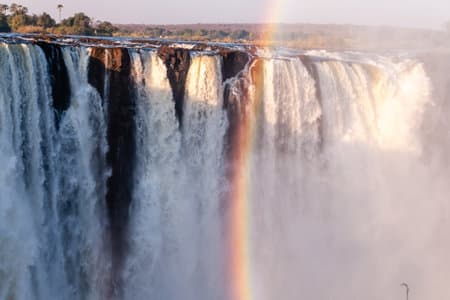
Transform your safari dreams into reality with tailored experiences in Zimbabwe's stunning landscapes.
Image via 123RF
Get in touch with us and we'll get back to you as soon as possible.
Here's what sets us apart from the competition
We deliver exceptional experiences at fair, transparent prices, ensuring every journey offers genuine quality, comfort, and unforgettable adventure without unnecessary costs.
Your journey is crafted around your interests, pace, and travel style, giving you a custom-made adventure that feels authentic, meaningful, and entirely your own.
From planning to your final day of travel, our dedicated team is available to guide, assist, and ensure your trip runs smoothly and stress-free.
Find answers to common questions
Contact Zimtrek via the contact form or email with your travel dates, group size, interests, and budget; a consultant will propose options that match your travel style and logistics. They refine the plan through a few rounds of revisions until the itinerary meets your needs.
After finalising the itinerary, Zimtrek issues a detailed quote and booking terms; a deposit is typically required to secure reservations, with the balance due before travel as specified in the contract. Cancellation and amendment policies are provided upfront and may vary by supplier and booking.
Yes; Zimtrek designs itineraries for solo travellers, couples, families, and small groups, adjusting accommodation types, activities, and transport to suit different ages and group dynamics. Recommendations balance convenience, safety, and the desired experience.
Zimtrek coordinates transfers, internal flights, ground transport, local guides, and bookings with a curated network of lodges, camps, and operators to provide seamless logistics. Your consultant will outline transport options and timing in the itinerary and confirm provider details before booking.
Zimtrek specialises in Southern and East Africa, including Zimbabwe, Botswana, Zambia, South Africa, Namibia, Kenya, and Tanzania, and offers safaris, Victoria Falls visits, beach holidays, cultural trips, wildlife photography, and adventure activities. It combines these into multi-destination routes where logistics allow.
In This Article
Personalized Safari Planning
Avoid Common Pitfalls
Zimbabwe's Unique Offerings
A well-built safari in Zimbabwe starts with decisions that shape the whole journey: how much driving you want, whether you prefer river, bush, or rocky landscapes, and how private you want the experience to feel. Zimtrek’s planning approach is built around those preferences, because a trip for a photographer, a family with young children, and a couple celebrating an anniversary should not look the same. The most useful first step is not choosing a lodge; it is choosing the experience style. In Zimbabwe, that usually means deciding between a wildlife-first trip in places such as Hwange or Mana Pools, a scenery-and-culture trip that includes Matobo or the eastern highlands, or a mixed itinerary anchored by Victoria Falls.
Personalization works best when you start with your pace, not with a generic itinerary. A four-night trip can feel rushed if it includes too many long road transfers.
Think in practical terms. If you have six to eight nights, one region plus Victoria Falls is often more balanced than trying to cover several distant parks. If you have 10 to 14 nights, it becomes realistic to combine two wildlife zones, such as Hwange and Mana Pools, or pair Matobo with a Zambezi River stay. The value of a custom safari is that the route is chosen to fit your travel time, not the other way around. That is also where trusted local planning matters: road conditions, domestic flight availability, park access patterns, and lodge transfer timing all affect the final flow.
Often enough for Victoria Falls plus one major safari area without feeling rushed
The cleanest way to plan is to move from preferences to logistics in a fixed order. First, define the purpose of the trip. Is the priority game viewing, photography, birding, family bonding, or a celebration? Second, choose your setting. Zimbabwe offers distinct experiences: Hwange is known for broad wildlife concentrations and classic safari drives; Mana Pools is prized for river scenery and a more remote feel; Matobo adds dramatic granite landscapes and cultural depth; Victoria Falls is the natural gateway for adventure and soft landing days. Third, decide your transport mix. Self-drive can work for experienced travellers on specific routes, but many custom itineraries are better with a private vehicle, short flights, or a combination of both.
| Planning choice | Best for | Why it matters in Zimbabwe |
|---|---|---|
| One-region trip | Short stays and first-time safari travellers | Cuts transfer time and leaves more hours for game drives |
| Two-region circuit | Travellers with 8-12 nights | Balances wildlife variety with manageable movement |
| Fly-in plus road transfer | Comfort-focused itineraries | Reduces long road days while keeping the route flexible |
Once the route is set, match accommodation to the type of traveller. Tented camps suit guests who want close proximity to wildlife and a classic bush atmosphere. Small lodges suit travellers who value more structure, especially families or multi-generational groups. Riverside properties near the Zambezi often work well for slower itineraries because they create easy transition days between activities. Zimtrek’s advantage is in pairing the right property with the right road or flight sequence, which reduces the friction that often ruins a tailor-made trip.
The biggest planning error is trying to see too much. Zimbabwe rewards depth more than speed. A traveller who books multiple parks with long overland transfers may spend more time in transit than in the field. Another common mistake is choosing accommodation only by photos. In safari planning, location relative to gates, river access, and drive times often matters more than décor. A lodge that looks attractive online can still be a poor fit if it adds an hour of travel to every activity.
Do not assume every park works the same way. Road distances, transfer durations, and activity styles vary sharply between Zimbabwe’s safari regions.
A second pitfall is ignoring seasonality. Zimbabwe’s dry months usually improve game viewing because animals concentrate around reliable water, while greener months can be excellent for scenery, birdlife, and fewer crowds. The right season depends on your goal, not on a universal “best month.” A third mistake is underestimating how much logistics matter for a smooth trip: baggage limits on light aircraft, pickup timing, and border or domestic transfer sequencing can all affect a custom itinerary. These are not minor details; they determine whether the journey feels seamless.
Before you confirm anything, make sure the plan answers these practical questions clearly: how many nights are in each stop, whether transfers are private or shared, what activities are included, which meals are covered, and whether park fees or drinks are extra. You should also confirm the style of guide support you want. Some travellers prefer a dedicated driver-guide throughout, while others are happy with lodge guides at each location. If you are travelling as a family, ask about age policies for game drives, interleading rooms, and flexible dining times. If you are travelling for photography, ask about vehicle layout and the best departure times for light.
| Checklist item | What to confirm |
|---|---|
| Route timing | Transfer hours, flight days, and arrival buffers |
| Inclusions | Meals, activities, park fees, laundry, and drinks |
| Trip style | Family-friendly, photographic, adventure, or relaxed pace |
| Support level | Private guide, lodge guides, or mixed guiding |
It also helps to prepare a realistic packing list: light neutral layers, a warm layer for early mornings, good walking shoes, binoculars, and any personal items that are difficult to source on the road. Zimbabwe itineraries often involve changing temperatures between sunrise drives and midday rests, so flexible clothing is more useful than bulky baggage. The best custom safaris are built on these small decisions, because they make the whole journey feel effortless once you arrive.
Zimbabwe stands out because the safari experience is varied without feeling scattered. Hwange offers one of the country’s best-known wildlife areas, with broad open spaces and strong chances of seeing elephants, predators, and many plains species depending on the season and area visited. Mana Pools brings a very different mood: river frontage, floodplain scenery, and a quieter atmosphere that suits travellers who want a more immersive bush experience. Matobo adds something rare in safari planning: granite hills, heritage sites, and a landscape that feels completely different from the classic savannah image of Africa. Victoria Falls then provides a strong anchor for adventure, relaxation, and easy access at the start or end of a trip.
A strong Zimbabwe itinerary does not need to chase everything. A few well-chosen places often create a better trip than a long list of stops.
What makes these destinations especially useful for custom planning is that each one supports a different travel style. Wildlife photographers often prefer areas where light, open terrain, and animal movement work together. Families may prefer a lodge close to a major gateway with shorter transfer times. Travellers interested in landscapes and history often benefit from adding Matobo National Park rather than another game-drive stop. Zimtrek’s approach is to match each location to a specific purpose, so the itinerary feels intentional rather than stitched together.
The most successful custom safaris in Zimbabwe usually balance active days with recovery time. If every day starts before sunrise and ends late, even enthusiastic travellers can begin to feel the pace. That is why it helps to combine higher-energy wildlife activities with slower, restorative moments. A Victoria Falls stay might include a walking tour or a river activity followed by an afternoon at leisure. A Hwange camp might be paired with a lodge that offers a pool and a calm midday rhythm. A Mana Pools itinerary can work especially well when the focus is on fewer, richer activities rather than constant movement.
| Travel style | Good fit in Zimbabwe | Planning note |
|---|---|---|
| Adventure-led | Victoria Falls and Zambezi-side stays | Leave room for rafting, walks, or scenic boat time |
| Safari-focused | Hwange and Mana Pools | Prioritise game-viewing windows and short transfer links |
| Mixed pace | Victoria Falls plus one park | Best for travellers who want variety without overpacking the route |
For many travellers, the ideal rhythm is one active morning, one relaxed afternoon, and one travel day between regions. This is particularly important if you are moving between road and air segments. When itinerary design respects that rhythm, the trip feels more luxurious even if the focus is on mid-range or simple comfort rather than high-end finishes. Good pacing is one of the clearest signs of thoughtful safari planning.
A meaningful safari in Zimbabwe can include more than wildlife. Community visits, cultural demonstrations, local craft markets, and heritage experiences can add depth when they are selected carefully and respectfully. The key is to avoid adding an activity just for variety. It should connect naturally to the route and be run in a way that benefits hosts as well as visitors. Travellers who value authentic context often enjoy time with local guides who can explain land use, conservation realities, and daily life around the parks.
Choose community activities that are part of the itinerary, not rushed add-ons. A short but thoughtful visit is better than a crowded schedule.
This is also where a specialist planner adds real value. The right operator can recommend experiences that are practical to reach, appropriate for your travel style, and respectful of local partners. For a family, that might mean a hands-on cultural stop with time for questions. For a couple, it may be a scenic lunch stop or a guided heritage walk. For a small group, it could be a combination of wildlife viewing and a community-based activity that breaks up the journey without making it feel fragmented.
The strength of a custom safari is not simply that it is private; it is that every choice is linked to a purpose. Zimbabwe is especially well suited to this approach because the country offers compact but diverse regions, reliable safari experiences, and a strong mix of wildlife, landscape, and cultural depth. When your route is built carefully, you spend less time negotiating logistics and more time enjoying the places you came to see. That is the real advantage of planning with local knowledge.
If you are comparing possibilities, start with the kind of trip you want to remember: a wildlife-focused escape, a balanced family holiday, a photographic journey, or a safari combined with culture and scenery. Then build the trip around that goal, not around a generic package. Zimtrek’s custom safari planning is designed to do exactly that, using trusted accommodation partners, practical routing, and on-the-ground insight to shape an itinerary that feels personal from the first day to the last.
Get in touch with us and we'll get back to you as soon as possible.
Here's what sets us apart
We deliver exceptional experiences at fair, transparent prices, ensuring every journey offers genuine quality, comfort, and unforgettable adventure without unnecessary costs.
Your journey is crafted around your interests, pace, and travel style, giving you a custom-made adventure that feels authentic, meaningful, and entirely your own.
From planning to your final day of travel, our dedicated team is available to guide, assist, and ensure your trip runs smoothly and stress-free.
Don't just take our word for it
Keep reading