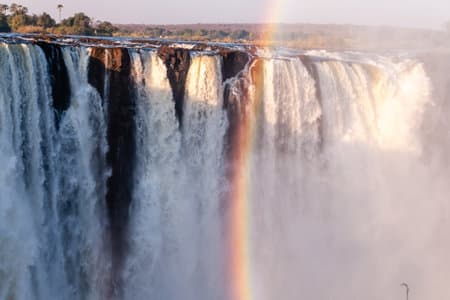
Explore how to create impactful educational journeys across Africa for students and families.

Image via 123RF
Get in touch with us and we'll get back to you as soon as possible.
Here's what sets us apart from the competition
We deliver exceptional experiences at fair, transparent prices, ensuring every journey offers genuine quality, comfort, and unforgettable adventure without unnecessary costs.
Your journey is crafted around your interests, pace, and travel style, giving you a custom-made adventure that feels authentic, meaningful, and entirely your own.
From planning to your final day of travel, our dedicated team is available to guide, assist, and ensure your trip runs smoothly and stress-free.
Find answers to common questions
Contact Zimtrek via the contact form or email with your travel dates, group size, interests, and budget; a consultant will propose options that match your travel style and logistics. They refine the plan through a few rounds of revisions until the itinerary meets your needs.
After finalising the itinerary, Zimtrek issues a detailed quote and booking terms; a deposit is typically required to secure reservations, with the balance due before travel as specified in the contract. Cancellation and amendment policies are provided upfront and may vary by supplier and booking.
Yes; Zimtrek designs itineraries for solo travellers, couples, families, and small groups, adjusting accommodation types, activities, and transport to suit different ages and group dynamics. Recommendations balance convenience, safety, and the desired experience.
Zimtrek coordinates transfers, internal flights, ground transport, local guides, and bookings with a curated network of lodges, camps, and operators to provide seamless logistics. Your consultant will outline transport options and timing in the itinerary and confirm provider details before booking.
Zimtrek specialises in Southern and East Africa, including Zimbabwe, Botswana, Zambia, South Africa, Namibia, Kenya, and Tanzania, and offers safaris, Victoria Falls visits, beach holidays, cultural trips, wildlife photography, and adventure activities. It combines these into multi-destination routes where logistics allow.
In This Article
Unique Learning Opportunities
Step-by-Step Planning
Common Pitfalls
Educational tours work best when they are treated as guided learning journeys rather than sightseeing add-ons. In Southern Africa, that can mean a class studying ecology on a Chobe river cruise, history students tracing liberation-era memory sites in Zimbabwe, or younger learners comparing classroom maps with real landscapes in Namibia’s desert regions. The value comes from pairing curriculum goals with place-based experiences that students can observe, discuss, sketch, measure, and question in real time.
A strong educational itinerary does not try to cram in everything. It selects a few experiences with clear learning outcomes, then gives students time to reflect and connect the trip back to classwork.
For Zimtrek-style planning, the most effective trips are built around Southern Africa safari destinations, conservation areas, heritage sites, and communities where learning is active. A wildlife monitoring session, for example, can teach biodiversity, data collection, and habitat management in one morning. A cultural village visit can open discussion on livelihoods, language, adaptation, and responsible tourism. This is why educational travel tends to work especially well in Botswana, Zimbabwe, Zambia, Namibia, and South Africa, where logistics can be designed around both travel comfort and hands-on interpretation.
Can combine ecology, history, geography, and community learning when planned with clear objectives.
Educational tours are not only for schools. They can suit university groups, home-learning families, youth organisations, and adult learners who want subject-specific immersion. The key is matching the pace and depth of the itinerary to the group. A biology class may need long field sessions and expert interpretation, while a mixed-age family group may prefer shorter activities, flexible transport, and interactive guides who can keep both children and adults involved.
| Group type | Best learning focus | Best-fit Southern Africa examples |
|---|---|---|
| Primary and secondary schools | Nature, geography, culture, group work | Kruger region, Victoria Falls, Chobe, coastal heritage sites |
| University or college groups | Conservation, development, policy, field methods | Botswana wetlands, Namibian research areas, South African museums |
| Families and homeschoolers | Curiosity-led, hands-on discovery | National parks, cultural centres, guided city heritage walks |
For international travellers, educational travel often works best when the itinerary includes a mix of wildlife, people, and place. For regional African learners, the trip can also build confidence through cross-border travel, shared history, and direct exposure to conservation models or community projects that are relevant to the curriculum.
Southern Africa offers a wide range of educational settings, but a few stand out because they create strong learning outcomes without excessive complexity. Botswana is excellent for wetland ecology, river systems, and low-impact tourism models. Zimbabwe combines heritage, archaeology, and wildlife in one country, making it useful for multidisciplinary itineraries. Zambia works well for water, geography, and adventure learning around the Zambezi. Namibia is ideal for geology, desert adaptation, astronomy, and conservation discussions. South Africa adds museums, battlefields, city history, marine science, and accessible safari options.
| Destination | Strong subject areas | Best learning activity |
|---|---|---|
| Botswana | Ecology, conservation, hydrology | Guided wetland and wildlife observation |
| Zimbabwe | History, heritage, geography | Falls viewing, cultural visits, heritage interpretation |
| Namibia | Geology, climate, adaptation | Desert field study and landscape comparison |
Before building the itinerary, define the learning outcomes in plain language. Ask what students should know, explain, or demonstrate after the trip. Then check the practical constraints: age range, group size, travel dates, supervision ratios, dietary needs, and whether the group can handle long road transfers or early departures. These details matter because a well-structured educational tour is only as good as the group’s ability to absorb it comfortably.
Avoid overloading the first planning draft. If every day has a major transfer and two major activities, students will lose attention before the trip reaches its strongest moments.
It also helps to decide early whether the tour is curriculum-led, enrichment-led, or mixed. Curriculum-led tours need more structured interpretation and assessment support. Enrichment-led tours can lean into discovery and inspiration. Mixed itineraries usually work best for families and small groups because they balance education with enjoyment and recovery time.
Write down the concepts you want learners to engage with: biodiversity, migration, trade routes, heritage, conservation economics, or land use. This makes it easier to choose the right places and guides.
Choose locations that naturally support the topic. For example, a conservation topic suits a safari landscape, while a history module may need a museum, memorial site, or community oral-history session.
Plan sketching, note-taking, observation sheets, short group discussions, or simple field tasks. Students remember more when they participate rather than only listen.
Transport, accommodation, meal timing, and check-in procedures should be finalised well ahead of departure. For school groups, risk assessments and parent communication should happen before deposits are paid.
The trip should end with reflection. Posters, essays, photo journals, presentations, or class discussions help students convert experience into knowledge they can retain.
Planning sequence:
Learning goals → destination match → activity design → logistics review → post-trip reflection
That sequence keeps the trip focused and avoids the common mistake of choosing attractions first and educational value second. When planning is done in that order, the result feels coherent to learners and manageable for educators.
One of the biggest mistakes is treating every stop as equally important. Educational tours need a clear learning arc, not a crowded sightseeing list. If students move from a wildlife drive to a cultural stop to a shopping stop with no thread connecting them, the trip becomes memorable but not necessarily educational. The stronger approach is to design each stop around a specific question, such as how ecosystems support communities, how geography shapes settlement, or how heritage is preserved.
Another common problem is ignoring travel fatigue. In Southern Africa, some of the most rewarding learning areas involve road transfers, border crossings, or remote lodges. That is manageable when planned properly, but it can quickly become frustrating if the itinerary is too tight. A two-hour activity followed by a four-hour drive is often more effective than trying to fit in three separate experiences in one day.
If the group is young, mixed-age, or first-time travelling in Africa, keep the pace gentle. A calmer schedule usually leads to better participation and fewer logistical issues.
A third mistake is choosing suppliers who can provide transport but not interpretation. Educational travel depends on context. A game drive becomes far more valuable when the guide can explain tracks, habitats, behaviour, and conservation pressures. A heritage visit is stronger when local voices are included, not just a generic overview repeated from a brochure.
For school groups, a simple briefing pack can save time on the road. Include behavioural expectations, currency notes if any purchases are expected, and a short explanation of what students should observe each day. If the group is family-based, create a lighter version with activity prompts rather than formal worksheets.
Engagement usually comes from variety and agency. Students pay more attention when they can predict what they are looking for and record what they notice. Short challenges work well: count bird species during a river stop, compare two landscapes, identify signs of human-wildlife coexistence, or interview a guide with a prepared question list. These small tasks make each day feel purposeful.
| Engagement tool | Why it works | Example use |
|---|---|---|
| Observation sheets | Gives focus during activities | Wildlife counts, plant identification, landscape notes |
| Photo prompts | Encourages careful looking | Documenting water, settlement, or conservation features |
| Short reflection sessions | Helps students process what they saw | Ten-minute debrief after each field visit |
For younger learners, storytelling and sensory learning are often more effective than long lectures. For older students, debate and comparison work well. Ask them to evaluate conservation trade-offs, compare tourism models, or discuss how communities balance livelihoods with environmental protection. The more the trip invites thinking, the more likely it is to stick.
Local partnerships are often the difference between an ordinary tour and a meaningful one. A knowledgeable local guide can translate landscape features into lived experience, introduce regional history, and adapt explanations to the group’s level. Community-based partners can also open access to projects, crafts, farms, or conservation initiatives that are not visible from the main road or standard tourist circuit.
In Southern Africa, the best learning often happens when educators work with lodges, guides, and community hosts who understand both visitor logistics and local context. That can improve timing, safety briefings, meals, and transport flow, but it also makes the educational content more authentic. Students hear how people actually live with wildlife, climate variability, tourism, and land-use change instead of only reading about it in a textbook.
Local partners also help educators avoid shallow “tourist-only” experiences by adding context, translation, and real examples from the region.
For planners working with Zimtrek-style itineraries, this is where careful destination pairing matters most. A well-designed educational journey across Botswana, Zimbabwe, Namibia, South Africa, or Zambia can be smooth, varied, and intellectually rich when the right guides and ground teams are involved. That combination is what turns travel into lasting understanding.
Get in touch with us and we'll get back to you as soon as possible.
Here's what sets us apart
We deliver exceptional experiences at fair, transparent prices, ensuring every journey offers genuine quality, comfort, and unforgettable adventure without unnecessary costs.
Your journey is crafted around your interests, pace, and travel style, giving you a custom-made adventure that feels authentic, meaningful, and entirely your own.
From planning to your final day of travel, our dedicated team is available to guide, assist, and ensure your trip runs smoothly and stress-free.
Don't just take our word for it
Keep reading