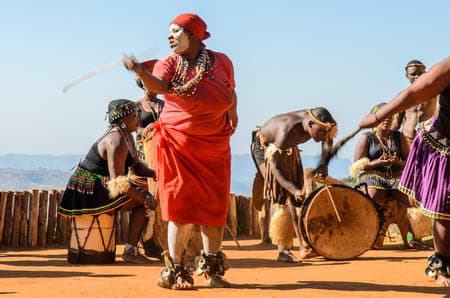
Immerse yourself in Africa's rich cultures and traditions with tailored cultural tours.

Image via 123RF
Get in touch with us and we'll get back to you as soon as possible.
Here's what sets us apart from the competition
We deliver exceptional experiences at fair, transparent prices, ensuring every journey offers genuine quality, comfort, and unforgettable adventure without unnecessary costs.
Your journey is crafted around your interests, pace, and travel style, giving you a custom-made adventure that feels authentic, meaningful, and entirely your own.
From planning to your final day of travel, our dedicated team is available to guide, assist, and ensure your trip runs smoothly and stress-free.
Find answers to common questions
Wear modest, comfortable clothing that covers shoulders and knees, bring a hat and water, ask your guide about photography etiquette, and carry small cash for local purchases or community contributions as advised by your guide.
Yes - Zimtrek designs tailor-made cultural activities that consider family-friendly pacing, child-appropriate interactions, and accessibility requirements, coordinating with partners to accommodate mobility limitations where possible.
Zimtrek can include visits to local villages, guided cultural walks, traditional music and dance performances, community-run projects, and markets to provide authentic insights into local life while supporting community partners.
Zimtrek works with vetted community partners and local guides who follow ethical visit protocols, ensure fair compensation, and design interactions that respect local customs and privacy while contributing to community income streams.
English is widely spoken in many tourism areas, and Zimtrek arranges local guides or interpreters when needed to facilitate meaningful exchanges and help navigate cultural nuances.
In This Article
Diverse Cultural Experiences
Responsible Tourism
Planning Insights
The best cultural journeys are not museum-style overviews; they are carefully designed encounters that help travellers understand how people live, celebrate, work, and preserve identity across different regions. In Southern Africa, a strong cultural itinerary can move from Zimbabwean stone heritage to Ndebele art, from Shona music and storytelling to township food scenes in South Africa, or from living village traditions in Botswana and Namibia to Swazi and Zulu heritage experiences. What makes these trips meaningful is not ticking off names on a map, but seeing how language, craft, ritual, cuisine, and daily life connect to place.
A good cultural tour should feel local, not staged. The most rewarding experiences usually involve small groups, community hosts, and guides who can explain context rather than just point out sights.
Travellers often arrive expecting one single version of “African culture,” but the reality is a mosaic of communities, histories, and traditions. Even within one country, the differences can be significant. In Zimbabwe, for example, a trip might combine the Great Zimbabwe stone ruins with living craft traditions in nearby communities and then continue to a local home-hosted meal or music session. In Namibia, the cultural story may shift from urban heritage in Windhoek to Himba, Herero, or San traditions in the north, each with distinct protocols for respectful visitation. That variety is exactly why cultural tours work best when they are built around a clear purpose: heritage, food, performance, crafts, or community interaction.
They usually allow deeper conversation, less pressure on hosts, and more flexibility to follow local rhythms.
A practical way to think about a cultural itinerary is by the kind of learning you want. Community-led visits are best for travellers who value conversation, handicrafts, and daily life perspectives. In Southern Africa, these experiences often overlap, which is why a tailored plan is more effective than a standard package.
| Cultural focus | What you gain | Best for |
|---|---|---|
| Heritage sites and monuments | Historical context and regional identity | Travellers who like history and interpretation |
| Village and community visits | Everyday routines, crafts, and local stories | Curious travellers seeking real interaction |
| Food and market experiences | Flavours, ingredients, and social customs | Families, couples, and food-led travellers |
| Performances and festivals | Rhythm, symbolism, and celebration | Visitors who want energy and atmosphere |
The right choice starts with your travel style, not with the destination name. If you want structured learning, choose a tour with an interpreter-guide or specialist host. If you prefer immersion, look for community-run experiences that include meals, demonstrations, or time to ask questions. If you are travelling with children, choose shorter visits with hands-on elements such as pottery, music, beadwork, or cooking. If you are combining culture with safari, pick locations that sit naturally along your route rather than forcing long detours.
The strongest itineraries connect culture to place. A heritage stop near a safari corridor or a city walking tour before a lodge transfer usually works better than a rushed day trip.
It also helps to think about pace. Some travellers enjoy a full-day cultural route with multiple stops, while others prefer one meaningful visit paired with leisure time. Zimtrek-style planning works best when each day has a clear purpose: one deep cultural encounter, one logistical transfer, or one combined activity. That reduces fatigue and gives space for genuine conversation. For example, a Zimbabwe journey might include a morning heritage site, lunch with a local host, and an afternoon scenic drive to a safari lodge. A South African option might pair urban history with a township food experience and then move to a coastal or wildlife stay.
Look closely at the operator’s structure. Ask who leads the experience, how the community benefits, whether photography is permitted, and whether the visit supports local guides, performers, or artisans. A strong cultural product should explain these details clearly. If a tour description is vague about inclusions, that is a warning sign. You want to know what is actually covered: entry fees, transport, meals, guide time, and any community levy or craft purchase expectations. Clear structure is a sign of respect, not rigidity.
| What to check | Why it matters | Better choice |
|---|---|---|
| Guide knowledge | Context turns a visit into real learning | Local or specialist guides with cultural training |
| Community benefit | Ensures money stays closer to hosts | Tours that name partners or community groups |
| Duration | Too many stops can reduce engagement | One or two substantial visits per day |
If you are a first-time visitor, choose a short, well-guided cultural encounter that includes explanation and time for questions. If you are a repeat traveller, choose a deeper route that combines a heritage site with workshops or community meals. If you travel as a family, focus on interactive experiences that children can participate in without feeling like observers only. In all cases, the goal is the same: leave with better understanding, not just better photos.
Once you know your style, it becomes easier to decide what kind of tour will feel worthwhile. In Southern Africa, the strongest options usually fall into four practical formats: heritage routes, village or community visits, food and market experiences, and arts-led tours. Each format gives a different level of interaction, and each suits a different kind of traveller. The best cultural immersion trips often combine two formats rather than trying to do everything at once.
Be cautious of tours that promise “authenticity” without explaining who hosts the visit or how people are compensated. Ethical cultural tourism should be transparent about participation and local benefit.
Start with three basics: your route, your pace, and your expectations. Route matters because cultural stops work best when they fit naturally between destinations such as Victoria Falls, Hwange, the Matobo Hills, the Okavango-linked region, Cape Town, the Drakensberg, or Namibia’s central corridor. Pace matters because a rushed day often creates superficial interaction. Expectations matter because a good host visit is a conversation, not a performance you direct.
A simple local culture tours checklist helps. First, confirm whether the experience is private, shared, or community-hosted. Second, ask what transport is included and whether pick-up times are realistic. Third, find out if photography has any restrictions, especially during home visits or ceremonies. Fourth, carry small cash in case craft purchases are part of the experience. Fifth, dress modestly and adapt to the tone of the place you are visiting. These small decisions make a noticeable difference to how the day unfolds.
Travellers usually remember conversation, context, and atmosphere more than quantity.
| Tour type | What it typically includes | Good fit for |
|---|---|---|
| Heritage route | Sites, interpretation, historical context | History-focused travellers and students |
| Community visit | Home-hosted interactions, crafts, daily life | Travellers seeking immersion and conversation |
| Food tour | Markets, tastings, cooking, local dining | Families, couples, and food lovers |
| Arts and performance | Music, dance, drumming, craft demonstrations | Visitors wanting energy and cultural expression |
The first mistake is treating every cultural stop as a quick photo opportunity. That often makes hosts feel observed rather than engaged with. The second is ignoring context and asking for entertainment without understanding what a ritual, song, or craft means. The third is overpacking the itinerary; cultural trips need time for listening, not just movement. The fourth is assuming all communities welcome the same level of access. Some places are comfortable with open conversation, while others require a more formal approach. Respecting those boundaries is essential.
Another common issue is booking the cheapest possible option without checking what is actually included. A lower price may mean a larger group, less guide time, or little community involvement. In contrast, a well-priced private or semi-private experience often gives better value because the interpretation is stronger and the logistics are smoother. For many travellers, the extra clarity is worth more than saving a small amount on the day.
Good cultural travel is measured by quality of engagement, not by the number of attractions seen. The most memorable moments are usually the conversations that happen between stops.
When cultural tours are planned responsibly, the benefits extend beyond the traveller. Local guides gain work that values interpretation skills. Artisans and hosts gain direct income. Communities gain a platform to present themselves in their own words. Travellers gain a richer understanding of the region they are visiting and often come away with a more realistic view of African societies than they would from a standard sightseeing trip.
There is also a practical benefit: cultural knowledge often improves the rest of the journey. When you understand local customs, greetings, meal times, or social etiquette, cultural heritage sites and safari lodge stays and city visits become smoother. That is one reason Zimtrek-style itinerary planning works so well in Southern Africa. Cultural experiences can be woven into a broader route with transfers, safari nights, and relaxation time, creating a trip that feels connected rather than pieced together.
Get in touch with us and we'll get back to you as soon as possible.
Here's what sets us apart
We deliver exceptional experiences at fair, transparent prices, ensuring every journey offers genuine quality, comfort, and unforgettable adventure without unnecessary costs.
Your journey is crafted around your interests, pace, and travel style, giving you a custom-made adventure that feels authentic, meaningful, and entirely your own.
From planning to your final day of travel, our dedicated team is available to guide, assist, and ensure your trip runs smoothly and stress-free.
Don't just take our word for it
Keep reading