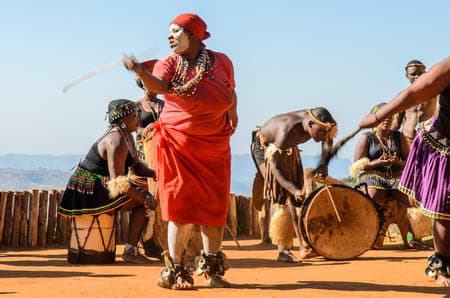
Immerse yourself in authentic local cultures while supporting communities through responsible travel.
Image via 123RF
Get in touch with us and we'll get back to you as soon as possible.
Here's what sets us apart from the competition
We deliver exceptional experiences at fair, transparent prices, ensuring every journey offers genuine quality, comfort, and unforgettable adventure without unnecessary costs.
Your journey is crafted around your interests, pace, and travel style, giving you a custom-made adventure that feels authentic, meaningful, and entirely your own.
From planning to your final day of travel, our dedicated team is available to guide, assist, and ensure your trip runs smoothly and stress-free.
Find answers to common questions
Wear modest, comfortable clothing that covers shoulders and knees, bring a hat and water, ask your guide about photography etiquette, and carry small cash for local purchases or community contributions as advised by your guide.
Yes - Zimtrek designs tailor-made cultural activities that consider family-friendly pacing, child-appropriate interactions, and accessibility requirements, coordinating with partners to accommodate mobility limitations where possible.
Zimtrek can include visits to local villages, guided cultural walks, traditional music and dance performances, community-run projects, and markets to provide authentic insights into local life while supporting community partners.
Zimtrek works with vetted community partners and local guides who follow ethical visit protocols, ensure fair compensation, and design interactions that respect local customs and privacy while contributing to community income streams.
English is widely spoken in many tourism areas, and Zimtrek arranges local guides or interpreters when needed to facilitate meaningful exchanges and help navigate cultural nuances.
In This Article
Authentic Engagement
Avoid Common Pitfalls
Support Local Communities
Authenticity is the difference between watching culture from a distance and understanding it in context. On a well-run cultural visit, you are not just seeing performances or shopping at a market; you are learning who is hosting you, how the community chooses to present itself, and what your spending actually supports. For Southern Africa in particular, this matters because many communities welcome visitors into living, working places where people are balancing tourism, family life, and local traditions at the same time.
A meaningful visit should feel reciprocal: you gain context and the host community receives fair pay, respect, and a voice in how the experience is delivered.
The practical test is simple. Does the experience include local hosts making decisions about the content, timing, and pace? Are you meeting people in a place they already use and care for, rather than a set built only for tourists? In Zimbabwe, Botswana, Zambia, Namibia, South Africa, and neighbouring safari regions, the most rewarding cultural encounters often happen in community-led craft centres, homesteads, farms, markets, or heritage sites where the guide can explain everyday life, not just stage a photo stop.
| Experience type | What makes it feel authentic | What to question |
|---|---|---|
| Community visit | Hosted by residents who explain daily routines and local priorities | Is the community setting the rules, or only receiving visitors? |
| Market walk | You learn how goods are made, traded, and priced locally | Are you being rushed through as a shopping stop? |
| Cultural demonstration | Explanation of meaning, not only a performance for the camera | Is it reduced to entertainment without context? |
For travellers booking through Zimtrek Travel, authenticity also means the itinerary is matched to your interests. A family may want a gentle village walk or craft activity; a couple may prefer a food-focused or storytelling experience; a small group may enjoy a longer, guided discussion with a community elder or artisan. The point is not to collect experiences quickly, but to choose one that is specific enough to teach you something real.
Before you join any cultural visit, prepare in three ways: learn the basics of the destination, understand the social setting, and know what kind of behaviour is expected. This does not require extensive research, but it does require enough awareness to avoid appearing casual about people’s homes, beliefs, or work. A little preparation usually makes the difference between awkward and respectful.
basic things to check before a visit: dress expectations, photography rules, and whether gifts or purchases are appropriate
Start with dress and conduct. In many Southern African settings, modest clothing is the safer choice for village visits, community ceremonies, or religious spaces. Also consider whether shoes need to be removed, whether greetings are expected before a tour begins, and whether eating or sitting arrangements follow local custom. If you are unsure, ask your guide before arrival rather than improvising on site.
Do not assume a smile or a camera-ready setting means permission. In many communities, photography, audio recording, and drone use require explicit consent.
It also helps to understand the money side of the experience. A responsible tour should be transparent about what part of the fee reaches hosts, what covers transport and guiding, and whether purchases go directly to makers. That transparency is especially important in places where craft markets can attract middlemen. Zimtrek’s planning approach prioritises trusted local partners so the experience is smoother and the economic benefit stays closer to the people you meet.
The best way to choose is to work backwards from what you want to learn. If you enjoy food, look for market visits, home-hosted meals, or cooking demonstrations. If you prefer history, choose a heritage walk with a local interpreter who can connect stories to place. If you like hands-on interaction, ask for a craft, music, or farming experience where participation is invited, not forced.
When a guide introduces people by name and explains their role, the visit usually feels more grounded and respectful than a generic stop with a scripted speech.
During the visit, slow down enough to listen. Ask open questions about daily routines, seasonal work, or how traditions fit modern life. Avoid treating people as exhibits. In small communities, conversation often becomes richer when travellers are curious about practical details, such as how families manage water, farming, food preservation, or schooling. Those details reveal more than surface-level folklore.
If your trip includes several stops, build rhythm into the itinerary. One cultural experience paired with safari or beach time is often more memorable than a long string of similar visits. Zimtrek commonly plans Southern Africa journeys this way, combining wildlife and cultural context so travellers understand both the landscape and the people who live within it.
The most common mistake is assuming that any visit labelled “authentic” is automatically responsible. Marketing words can be vague. A better approach is to ask who designed the activity, who benefits financially, and whether the experience fits the community’s pace rather than the visitor’s impatience. Another frequent error is trying to pack too many cultural stops into one day, which turns each encounter into a blur.
Travelers also sometimes over-focus on buying souvenirs as proof of support. Buying locally is helpful, but it is not the only form of support. Paying fair entry fees, respecting time, staying longer in locally owned lodges, and choosing guides from the area can have a deeper effect than a rushed shopping stop. In fact, a short visit with fair compensation can be more meaningful than a longer visit that leaves little behind.
Another mistake is asking questions that feel intrusive or turning personal stories into content for social media. People may share generously, but that does not mean every detail is for public posting. Treat images, names, and home settings with the same care you would want visitors to show in your own community.
A responsible cultural visit is easiest when the basics are sorted before you travel. Use this checklist as a planning tool, not a formality. It helps you avoid awkward moments and makes it easier for hosts to welcome you on fair terms.
| Checklist item | Why it matters | Good practice |
|---|---|---|
| Host ownership | Shows whether locals shape the experience | Ask who designed and leads the visit |
| Fair payment | Supports households and small enterprises | Confirm what is included and paid locally |
| Consent for photos | Protects privacy and dignity | Ask before every close-up or recording |
| Time and pace | Avoids rushed, superficial visits | Choose a duration that allows conversation |
If a cultural stop looks identical to a standard souvenir transfer, ask for more detail. Real community experiences usually include names, context, and local decision-making.
Some of the most rewarding cultural experiences in Southern Africa are the ones travellers overlook because they are not heavily advertised. These can include a small-scale food market in a township edge area, a women-led basket or bead workshop, a community garden project, a fishing settlement, or a heritage walk tied to migration, trade, or language. What makes them valuable is not spectacle, but specificity.
In Zimbabwe and Namibia, for example, travellers may learn more from an afternoon with artisans or farmers than from a busier tourist attraction. In Botswana or Zambia, a village lunch or storytelling session can reveal how wildlife, rainfall, and land use shape everyday choices. In South Africa, local cooking, music, or historical neighbourhood walks can add depth to a safari itinerary without making the trip feel overloaded.
These smaller-scale experiences also tend to be better for travellers who prefer calm, one-to-one interaction. They are not about covering distance quickly. They are about hearing how people actually live, work, and adapt. That makes them especially useful for visitors who want more than a photo stop but do not want a staged performance.
Zimtrek Travel builds cultural components into wider Southern Africa itineraries by working with trusted local guides, accommodation partners, and community-linked operators. That approach keeps logistics smooth while making it easier to choose experiences that fit a traveller’s style. For example, a safari guest might add a village visit near a lodge transfer, while a family may choose a half-day cultural activity that fits around wildlife viewing or relaxation.
The practical advantage is planning precision. Instead of sending travellers to a generic attraction, Zimtrek can match the route, the timing, and the kind of interaction you want. That matters when you are balancing long drives, border crossings, or lodge check-in times across Zimbabwe, Botswana, Zambia, Namibia, and South Africa. Better sequencing usually means a better experience for both guest and host.
Community-linked travel works best when it is part of a wider itinerary with fair stays, reliable transfers, and enough time on the ground to listen properly.
Different travellers need different cultural formats. Solo travellers usually benefit from small groups or private guiding, because it creates space for questions and a safer, more personal pace. Couples often prefer intimate experiences such as a food tasting, a private market walk, or a home-hosted lunch that feels conversational rather than crowded. Families need shorter visits with simple explanations, hands-on elements, and a setting where children can participate respectfully without becoming disruptive.
Small groups and friends may enjoy workshops or longer heritage walks, especially when the guide can manage discussion well. Travellers on tighter budgets can still travel responsibly by choosing a few well-run experiences rather than many rushed ones. Guests with a stronger interest in design, history, or food should ask for depth: who made the object, how the recipe evolved, or how the neighbourhood changed over time. That turns a simple visit into a memorable learning experience.
For travellers planning across Southern Africa, the smartest choice is usually not the most famous activity, but the one that aligns with your pace, your route, and the local host community’s way of sharing their story.
Get in touch with us and we'll get back to you as soon as possible.
Here's what sets us apart
We deliver exceptional experiences at fair, transparent prices, ensuring every journey offers genuine quality, comfort, and unforgettable adventure without unnecessary costs.
Your journey is crafted around your interests, pace, and travel style, giving you a custom-made adventure that feels authentic, meaningful, and entirely your own.
From planning to your final day of travel, our dedicated team is available to guide, assist, and ensure your trip runs smoothly and stress-free.
Don't just take our word for it
Keep reading