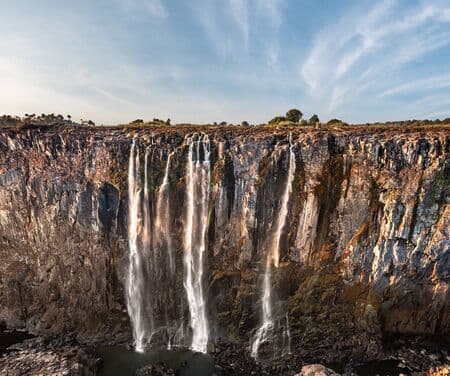
Optimize your visit with key insights on weather, water levels, and activities throughout the year.
Get in touch with us and we'll get back to you as soon as possible.
Here's what sets us apart from the competition
We deliver exceptional experiences at fair, transparent prices, ensuring every journey offers genuine quality, comfort, and unforgettable adventure without unnecessary costs.
Your journey is crafted around your interests, pace, and travel style, giving you a custom-made adventure that feels authentic, meaningful, and entirely your own.
From planning to your final day of travel, our dedicated team is available to guide, assist, and ensure your trip runs smoothly and stress-free.
Find answers to common questions
The falls are often most dramatic in the months following the rainy season, approximately February to May, when river levels are high, though flow varies year to year and sections of the falls can be affected by seasonal changes.
The dry season (typically May to October) usually offers the best wildlife viewing as animals concentrate around water sources and vegetation is sparser, improving visibility; specific peak months vary by country and ecosystem.
Birdwatching is excellent during the rainy and post-rainy seasons (roughly October to April) when migrant and breeding species are present and many birds are displaying; timing can vary by species and region.
Consider shoulder seasons (just before or after peak dry season) for fewer visitors while still good wildlife viewing and pleasant weather; tailor timing to your target country and activities, as peak periods differ between national parks and coastal areas.
June to October and late December to February are commonly preferred for beach holidays due to drier, sunnier conditions and calmer seas, while the long rains (March-May) and short rains (October-December) may bring heavier showers.
In This Article
Seasonal Insights
Zambia vs Zimbabwe
Practical Travel Tips
The easiest way to plan Victoria Falls is to start with one question: do you want to see the falls at their most powerful, or do you want the clearest views and the widest choice of activities? Those are not the same months. The Zambezi River changes through the year, and that changes spray, visibility, river-based adventures, and even how comfortable it feels to walk the viewpoints. In practice, travellers usually get the best balance in the middle of the year, while photographers and first-time visitors often prefer the high-water months when the falls are thunderous and dramatic.
Quick planning rule: choose high water for drama, lower water for detail, and shoulder months if you want a mix of viewing, activities, and fewer crowds.
is usually enough to see the falls, do one river activity, and add a safari transfer or day trip.
For most travellers, the right trip length is two nights, three days. That gives you one arrival day, one full sightseeing day, and one buffer day for a flight delay, an activity change, or a sunset cruise. If you want to pair the falls with Hwange, Chobe, or a longer Zimbabwe circuit, add more time rather than trying to squeeze everything into one stop.
Victoria Falls is not a static landmark. From roughly February to May, the Zambezi is usually in its high-water phase, with heavy spray and the fullest, loudest cascades. From about August to December, the river drops enough that the rock face becomes more visible and some adventure activities open up more reliably. January and June to July tend to be transition months, which can be excellent if you want a balanced experience without the most intense mist or the lowest river levels.
| Season | Typical Conditions | Best For | Trade-off |
|---|---|---|---|
| Feb-May | Highest water, dense spray, lush surrounds | Dramatic views, classic first visit | Mist can hide parts of the gorge |
| Jun-Jul | Falling water, clearer viewpoints, cooler mornings | Balanced viewing and activities | Some spray still strong on Zimbabwe side |
| Aug-Oct | Low water, warmer, clearer rock formations | Devil’s Pool access, rafting, photography detail | Reduced waterfall volume |
| Nov-Jan | Lowest flow around late dry season, then early rains | Rock structure, fewer crowds, lower prices | Falls can look fragmented from some viewpoints |
If your priority is the strongest visual impact, book for March or April. If your priority is activities and seeing the gorge more clearly, target August to October.
The viewing side matters almost as much as the month. Zimbabwe, through Victoria Falls town, usually gives the broadest set of viewpoints and the most complete panoramic sense of the falls during high water. Zambia, through Livingstone, can feel closer and more adventurous in the drier months, especially when water levels are low enough to reveal the edge of the cliff and access to features like Devil’s Pool and Livingstone Island is possible.
| Side | Strengths | Best Months | Who It Suits |
|---|---|---|---|
| Zimbabwe | Wide viewpoints, easier appreciation of the full curtain | Feb-Jul | First-timers, photographers, families |
| Zambia | Closer access to the gorge and seasonal activities | Aug-Dec | Adventure travellers, repeat visitors |
A practical rule is to sleep on the Zimbabwe side if you are visiting in the wettest months, then consider Zambia if you are travelling later in the dry season and want to combine the falls with rafting, island lunches, or a more activity-led stay. Many travellers actually benefit from seeing both sides because each one answers a different question about the same river.
Monthly conditions do not swing wildly overnight, but the differences are enough to shape your itinerary. The table below is a planning tool, not a promise, because the Zambezi’s flow depends on rainfall upstream and local weather can shift year to year. Still, it is a reliable way to narrow your dates.
| Month | Typical Water Level | Weather Feel | Best Activities |
|---|---|---|---|
| Jan | Rising after rains | Warm with possible showers | Falls viewing, sunset cruises |
| Feb | High and building | Hot, humid, green landscape | Panoramic viewpoints, photography |
| Mar | Very high | Warm, heavy spray | Most dramatic waterfall scenes |
| Apr | Peak flow often continues | Cooler mornings, misty | Zimbabwe viewpoints, raincoat walks |
| May | Still strong, beginning to ease | Dryer, comfortable | Best balance of views and comfort |
| Jun | Falling gradually | Cool mornings, dry afternoons | Viewing plus easier logistics |
| Jul | Moderate | Pleasant, dry | Multi-activity trips, safari links |
| Aug | Lower | Warmer, clearer skies | Rafting, game drives, clearer rock lines |
| Sep | Low | Hotter, dry | Devil’s Pool season, adventure focus |
| Oct | Very low | Hot, dry | Best for river-edge activities |
| Nov | Lowest or near lowest | Hot, first storms possible | Low-flow viewpoints, budget travel |
| Dec | Starting to rise again | Warm, early rains may return | Transitions between low and green season |
The best time depends on what kind of trip you are planning, not just what the calendar says. A photographer who wants scale, spray, and atmospheric mist should lean toward March to April. A couple planning a relaxed escape with comfortable temperatures and good lodge availability usually does well in May to July. An adventure traveller chasing rafting, cliff-edge experiences, and more detailed gorge views is often happier from August to October. Families with younger children tend to prefer the cooler, less intense middle of the year, when walking the viewpoints feels easier and activities can be paced more gently.
If you want one trip that balances scenery, comfort, and activity choice, June or July is often the safest planning sweet spot.
Another useful scenario is the safari add-on. If Victoria Falls is the start of a Zimbabwe, Botswana, or Zambia circuit, your date choice should also reflect where the rest of the trip will go. High-water months combine well with Hwange or Chobe if you want a strong visual introduction before game viewing. Lower-water months are better if your main goal is adventure first and wildlife second. This is where a custom itinerary matters: the best timing for the falls is not always the best timing for the whole region.
Pack for spray even when the river is not at its highest. A lightweight waterproof layer, quick-dry clothing, and a soft lens cloth are useful in almost every season because viewpoint paths can be damp. In high water, expect heavy mist that can soak phones and cameras within minutes. In low water, swap the raincoat for sun protection, because the exposed riverbanks get much hotter and shade is limited at some viewing points.
| Planning Item | What to Do | Why It Matters |
|---|---|---|
| Packing | Light waterproofs, sandals with grip, hat, sunblock | Conditions shift between spray, heat, and walking paths |
| Health | Discuss malaria prevention with a clinician before travel | Risk is seasonal and can change by side and itinerary |
| Timing | Plan activities early morning or late afternoon | Milder temperatures and better light |
Malaria precautions are not something to guess about. Speak with a medical professional well before travel, especially if you are combining the falls with safari areas in Zambia or Zimbabwe.
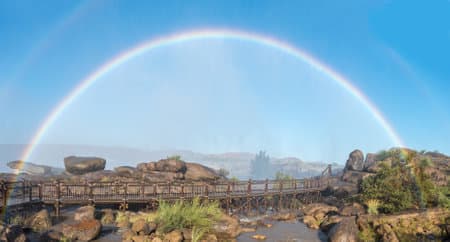
A useful planning detail is that the falls are easier to enjoy when you are not rushed. Build in time for one viewpoint walk, one river-based activity, and at least one slow meal or sunset period. If you are doing a low-water visit, ask about the timing of Devil’s Pool and Livingstone Island operations because access depends on river conditions and seasonal safety checks. If you are visiting for the Lunar Rainbow, plan around the full moon and confirm that the viewing dates line up with your arrival, since this is a short window and not available every night.
The most common mistake is choosing dates only by temperature and ignoring the river level. A warm month can still be the wrong month if you wanted full waterfall volume. The opposite is also true: the wettest months can overwhelm travellers who really wanted rafting or close-up gorge activities. A second mistake is staying only one night. That usually turns Victoria Falls into a rushed photo stop instead of a proper experience, and it leaves little room for weather changes or activity delays.
Do not assume one side is enough for every season. Zimbabwe often excels for panoramic viewing, while Zambia becomes more compelling as water drops and activities open up.
Other avoidable errors include underestimating spray in the high-water months, booking adventure activities too close to arrival, and forgetting that lodge rates can rise around school holiday periods and public holiday weekends. Late dry season is not automatically the lowest-cost period either, because it often overlaps with strong demand for rafting and island experiences. If you want value, look for shoulder dates rather than trying to squeeze into the absolute cheapest week.
If you want the single most balanced answer, aim for June to July. If you want the most dramatic waterfall, choose March to April. If you want the broadest range of river-edge activities, look at August to October. The real decision comes down to what you want Victoria Falls to feel like: a roaring wall of water, a clearer gorge experience, or a trip that combines both with safari and adventure add-ons. Once that is clear, the rest of the itinerary becomes much easier to shape.
For current conditions, it helps to check seasonality with trusted sources before you lock in flights or lodge dates. Zimtrek Travel uses that kind of planning logic to match travellers with the right side, the right month, and the right pace, so the falls fit the trip instead of competing with it.
Get in touch with us and we'll get back to you as soon as possible.
Here's what sets us apart
We deliver exceptional experiences at fair, transparent prices, ensuring every journey offers genuine quality, comfort, and unforgettable adventure without unnecessary costs.
Your journey is crafted around your interests, pace, and travel style, giving you a custom-made adventure that feels authentic, meaningful, and entirely your own.
From planning to your final day of travel, our dedicated team is available to guide, assist, and ensure your trip runs smoothly and stress-free.
Don't just take our word for it
Keep reading