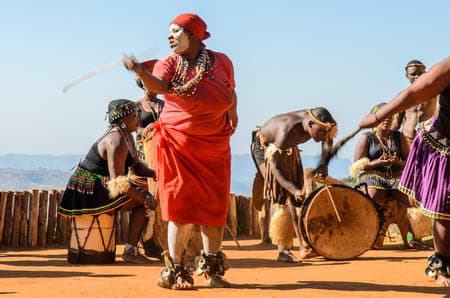
Engage respectfully with indigenous communities while exploring Africa's rich cultural tapestry.

Image via 123RF
Get in touch with us and we'll get back to you as soon as possible.
Here's what sets us apart from the competition
We deliver exceptional experiences at fair, transparent prices, ensuring every journey offers genuine quality, comfort, and unforgettable adventure without unnecessary costs.
Your journey is crafted around your interests, pace, and travel style, giving you a custom-made adventure that feels authentic, meaningful, and entirely your own.
From planning to your final day of travel, our dedicated team is available to guide, assist, and ensure your trip runs smoothly and stress-free.
Find answers to common questions
Wear modest, comfortable clothing that covers shoulders and knees, bring a hat and water, ask your guide about photography etiquette, and carry small cash for local purchases or community contributions as advised by your guide.
Yes - Zimtrek designs tailor-made cultural activities that consider family-friendly pacing, child-appropriate interactions, and accessibility requirements, coordinating with partners to accommodate mobility limitations where possible.
Zimtrek can include visits to local villages, guided cultural walks, traditional music and dance performances, community-run projects, and markets to provide authentic insights into local life while supporting community partners.
Zimtrek works with vetted community partners and local guides who follow ethical visit protocols, ensure fair compensation, and design interactions that respect local customs and privacy while contributing to community income streams.
English is widely spoken in many tourism areas, and Zimtrek arranges local guides or interpreters when needed to facilitate meaningful exchanges and help navigate cultural nuances.
In This Article
Respectful Engagement
Step-by-Step Guide
Cultural Sensitivity Checklist
The best way to approach tribal experiences in Africa is to start with the right expectation: you are not visiting a performance, you are being welcomed into a living community. That difference matters. A respectful visit is slower, more conversational, and often smaller in scale than the glossy cultural stops sold as quick add-ons. In Southern Africa, that usually means planning around places where community-led tourism, homestays, village walks, or locally guided interpretive visits are part of the offer, rather than simply arriving at a roadside display.
For travellers using Zimtrek Travel, this is where local planning really helps. A trusted operator can separate genuinely community-benefiting experiences from places that feel staged, rushed, or detached from local life. In Zimbabwe, Namibia, Botswana, South Africa, Zambia, and parts of East Africa such as Kenya and Tanzania, the quality of the encounter depends on who controls the experience, who gets paid, and whether the community has chosen to host visitors on its own terms.
A good cultural visit should leave the host community with income, dignity, and control over how visitors are received.
If you want authenticity, ask three practical questions before booking: who owns the experience, what part of the fee stays locally, and whether cameras, gifts, or dress codes are part of a community rule rather than a tourist script. Those details usually tell you more than marketing language does. A village visit that includes a local guide, a translation layer, and time for questions will often be more meaningful than a tightly scheduled stop with a fixed dance and souvenir table.
| Experience type | What it feels like | Best for |
|---|---|---|
| Community-guided village visit | Shared daily life, guided explanation, time for questions | Travellers who want context and respectful interaction |
| Household or homestay visit | Closer exchange, slower pace, more personal conversation | Travellers comfortable with intimacy and simpler settings |
| Guided cultural walk | Shorter, interpretive, often tied to local landscape or history | Families and first-time visitors |
A good visit starts before you arrive. First, learn the basic social rules of the community you plan to meet. Among the Maasai in Kenya and Tanzania, for example, you may need to understand why greeting customs, age-set roles, and the rhythm of communal life matter. In Namibia, visits with Himba communities can involve different expectations around personal space, photography, and how to behave in a homestead setting. In southern Africa, San-led experiences often emphasise language, land knowledge, and storytelling rather than staged “traditional” displays. The point is not to memorise etiquette like a test, but to show that you have made some effort.
Second, choose timing carefully. Arrive when the community wants visitors, not when it is merely convenient for your transfer schedule. If a guide says a visit is better in the morning because afternoon chores or school pickups take priority, respect that. Visits that fit around real life tend to feel more genuine because they are real life. Third, travel with a small group if possible. Smaller groups allow conversation, reduce pressure on the host, and make photography less intrusive.
If a cultural stop is rushed to 20 minutes, it is usually designed for sightseeing, not exchange.
A useful way to think about it is in layers. The first layer is logistics: transport, timing, entry fee, and guide arrangement. The second layer is conduct: greeting properly, asking before taking photos, and dressing in a way that avoids unnecessary attention. The third layer is reciprocity: buying crafts directly, paying agreed fees, and listening more than speaking. If you can handle those three layers, you are already far ahead of most casual visitors.
The most common mistake is treating tribal life as a backdrop. That shows up when travellers arrive with a camera-first mindset, ask people to repeat activities for photos, or assume everyone wants to be “documented.” Another frequent error is bargaining aggressively for handmade items that may be the community’s primary source of cash income. A fair purchase is part of ethical travel; a hard-sold souvenir is not the same thing as a market transaction in a city mall.
Avoid giving candy, pens, or money to children unless a host community specifically requests a different donation method. Well-meant gifts can create pressure, inequity, or crowding around visitors. Do not touch hair, clothing, tools, or sacred items unless invited. And do not compare communities in ways that flatten their differences; “more traditional,” “less developed,” or “more authentic” are phrases that usually reveal more about the visitor than the host.
If a guide encourages intrusive photos, insists on exaggerated performances, or discourages questions, the experience may be more commercial than cultural.
It also helps to avoid overpacking your itinerary with too many cultural stops. One thoughtful visit in a day is better than three rushed encounters. The difference is not just quality; it is also respect. Communities are not there to entertain a schedule. They are hosting within their own working lives.
Before you go, make sure you have the basics covered so the visit feels considered rather than improvised. This short checklist is practical, not performative, and it helps you arrive with the right mindset.
| Checklist item | Why it matters |
|---|---|
| Confirm the experience is community-led | Helps ensure local decision-making and local benefit |
| Ask about photography rules | Prevents awkward moments and respects privacy |
| Carry small cash for craft purchases | Direct support often matters more than souvenir markups |
| Dress modestly and practically | Signals respect and suits rural settings |
| Leave room in your schedule | Allows real conversation instead of rushing through the visit |
A final preparation note: think about what you can listen for, not just what you can see. Stories about cattle, land, language, migration, or ceremony often reveal how a community understands identity and continuity. If you approach the visit with patience, humility, and curiosity, you are far more likely to leave with something memorable.
Core things to confirm before any cultural visit: ownership, timing, and photography rules
The strongest cultural encounters are usually those that match a region’s lived reality. In Southern Africa, Maasai visits often pair well with open landscapes and pastoral traditions, while Himba encounters are shaped by homestead structure, desert adaptation, and family routines. San-led experiences are especially compelling when they are interpretive and land-based, because they can connect visitors to tracking knowledge, plant use, and storytelling rather than to a fixed stage show. Each of these experiences becomes richer when the guide is a cultural interpreter rather than a general driver.
What makes these visits distinctive is not exotic detail, but context. For example, a craft demonstration is more meaningful when you understand what the materials are used for at home, how long the technique has been practiced, and whether the pieces sold to visitors are the same as those used in daily life. Similarly, a dance performance has more value when the host community explains when the dance is performed, who participates, and what social role it plays. This is why Zimtrek prefers experiences where travellers can ask questions and the answers come from people who actually live the culture, not from a script.
Look for experiences that connect culture to land, livelihood, and language. Those links usually signal deeper interpretation.
Supporting communities is not a vague feel-good idea; it is a series of practical spending choices. When a visit is hosted by a local cooperative, community trust, or family-run enterprise, more money tends to stay in the area through wages, food supplies, guiding work, transport, and craft production. That is one reason Zimtrek works with carefully chosen local partners rather than routing travellers through generic stops with unclear ownership.
The best support is often specific. Buy a handwoven basket directly from the person who made it. Pay the agreed entrance or guiding fee without trying to renegotiate a cultural visit as if it were a market bargain. Stay in nearby lodges that hire local staff and source food locally when possible. If the visit includes community projects, make sure any donation is requested and managed by the hosts, not improvised by the traveller. Good intentions can still create clutter if they are not guided.
Money spent directly with hosts is usually more useful than gifts that cannot be shared fairly or used locally.
A thoughtful traveller also watches for balance. Community tourism should not turn people into permanent performers for outside visitors. If the experience is structured so that residents can choose when to host, how to present themselves, and what stories they want to tell, it is more likely to be sustainable over time. That is good for the visitor and better for the destination.
Different travellers need different formats, and choosing the right one improves both comfort and ethics. If you are travelling with children, shorter guided visits with clear explanations and space to ask simple questions are usually the best fit. Families tend to do well with village walks, craft demonstrations, or story sessions because they keep the pace manageable and avoid overloading young travellers.
If you are a couple or a pair of close friends looking for depth, choose a longer, slower experience with fewer people and more dialogue. That format gives you time to hear personal histories and ask follow-up questions without the pressure of a group moving on. For solo travellers, the best option is often a community-led experience with a qualified guide, especially if you want background on customs, translation support, and a sense of safety in unfamiliar settings. Solo visitors should prioritise clarity: where to meet, how long the visit runs, what to wear, and whether the guide remains with you throughout.
For photographers, the ideal experience is one with explicit permissions and a guide who can explain when images are appropriate and when they are not. For travellers on longer Southern Africa itineraries, these cultural encounters combine well with wildlife routes, especially when you want a contrast between game viewing and community connection. If you are planning around Zimbabwe, Botswana, Namibia, or Zambia, Zimtrek can build an itinerary that balances safari time with one or two considered cultural stops rather than trying to squeeze culture into transit days.
If your trip is short, choose fewer experiences and spend more time in each. Depth is more memorable than quantity.
Get in touch with us and we'll get back to you as soon as possible.
Here's what sets us apart
We deliver exceptional experiences at fair, transparent prices, ensuring every journey offers genuine quality, comfort, and unforgettable adventure without unnecessary costs.
Your journey is crafted around your interests, pace, and travel style, giving you a custom-made adventure that feels authentic, meaningful, and entirely your own.
From planning to your final day of travel, our dedicated team is available to guide, assist, and ensure your trip runs smoothly and stress-free.
Don't just take our word for it
Keep reading