A Comprehensive Guide to Planning Your Safari Experience by Season
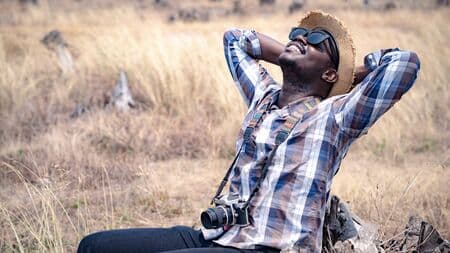
Image via 123RF
Get in touch with us and we'll get back to you as soon as possible.
Here's what sets us apart from the competition
We deliver exceptional experiences at fair, transparent prices, ensuring every journey offers genuine quality, comfort, and unforgettable adventure without unnecessary costs.
Your journey is crafted around your interests, pace, and travel style, giving you a custom-made adventure that feels authentic, meaningful, and entirely your own.
From planning to your final day of travel, our dedicated team is available to guide, assist, and ensure your trip runs smoothly and stress-free.
Find answers to common questions
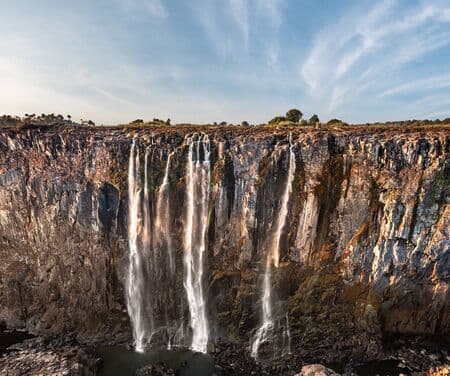
The falls are often most dramatic in the months following the rainy season, approximately February to May, when river levels are high, though flow varies year to year and sections of the falls can be affected by seasonal changes.
The dry season (typically May to October) usually offers the best wildlife viewing as animals concentrate around water sources and vegetation is sparser, improving visibility; specific peak months vary by country and ecosystem.
Birdwatching is excellent during the rainy and post-rainy seasons (roughly October to April) when migrant and breeding species are present and many birds are displaying; timing can vary by species and region.
Consider shoulder seasons (just before or after peak dry season) for fewer visitors while still good wildlife viewing and pleasant weather; tailor timing to your target country and activities, as peak periods differ between national parks and coastal areas.
June to October and late December to February are commonly preferred for beach holidays due to drier, sunnier conditions and calmer seas, while the long rains (March-May) and short rains (October-December) may bring heavier showers.
In This Article
Seasonal Insights
Wildlife Viewing
Practical Tips
If your main goal is wildlife, the most reliable window is the dry season from July to October. By then, grasses are shorter, bush cover thins out, and animals concentrate around permanent water sources, which makes game drives in places like Hwange, Mana Pools, and Matusadona much more rewarding for first-time visitors. If you want a cleaner balance of fewer crowds and better pricing, May, June, and November are usually the smartest months to consider. They sit on the shoulder of the dry and wet seasons, so you often get good wildlife conditions without paying peak-season rates.
For a first safari in Zimbabwe, July to October is the safest all-round recommendation for wildlife viewing, but May, June, and November often deliver stronger value.
If Victoria Falls is a major part of the trip, the answer changes. The falls are typically at their most dramatic from February to May, when water flow is strongest and the spray can be immense. That is the best period for seeing the falls in full force, although visibility can sometimes be reduced by mist. For travellers who want both falls and safari in one itinerary, the most practical compromise is usually May to early July, when the river is still impressive and game viewing is beginning to sharpen.
Best general window for classic Zimbabwe safari conditions
| Month | Wildlife | Victoria Falls | Crowds / Price | Overall Read |
|---|---|---|---|---|
| January | Green, scenic, strong birding | High water begins building | Lower demand, good value | Best for photographers who like lush landscapes |
| February | Good birdlife, animals dispersed | Very strong flow | Shoulder pricing | Excellent for the falls, mixed for safari |
| March | Green season game viewing | Peak or near-peak flow | Moderate demand | Strong all-round sightseeing month |
| April | Transition period | Still powerful | Good value | One of the most balanced months |
| May | Improving fast | Strong flow | Shoulder value | Ideal for mixed Falls and safari trips |
| June | Very good, cooler and drier | Excellent flow | Rising demand | A strong choice for comfort and wildlife |
| July | Peak viewing starts | Good flow | High season rates | One of the best safari months overall |
| August | Excellent in major parks | Moderate flow | High season | Top-tier for game drives |
| September | Very strong, dry conditions | Low flow | High season | Best for wildlife, not the falls |
| October | Excellent but hot | Very low flow | Still peak demand | A hard-hitting wildlife month for experienced travellers |
| November | Transition, first rains | Low to moderate flow | Good shoulder value | Underrated for flexible travellers |
| December | Green season begins | Building again | Holiday demand | Good for scenery, less consistent for game viewing |
For game viewing, Zimbabwe’s dry months are the most dependable because animals behave more predictably. In Hwange, the key advantage is water concentration: elephants, buffalo, giraffe, plains game, and predators spend more time near pumped pans and natural water points. In Mana Pools, the dry season also makes a major difference, especially for walking safaris and canoeing, because access is easier and animals are easier to spot in the open floodplain forest. Matusadona and parts of Gonarezhou follow a similar pattern, although each park has its own access and habitat rhythm.
July through October is the period when the bush is driest and visibility is at its best. Early mornings can be cool, especially in June and July, but by late dry season the heat becomes more intense, especially in October. The trade-off is worth it if your priority is seeing more animal activity in a shorter time. This is also the period when guides can spend less time searching and more time interpreting animal behaviour, which matters if you care about photography, predator tracking, or simply getting more from each drive.
October can be excellent for wildlife, but the heat is real. If you are sensitive to high temperatures, June to August is usually more comfortable.
For birders, the story changes. The green season from November to March brings migrants and strong breeding activity, so birding can be particularly rewarding even though big-game visibility is less consistent. Travellers who enjoy a greener landscape, fewer vehicles, and a more relaxed pace often prefer the shoulder period around November or early December. It is not the prime month for maximum game concentration, but it can feel more atmospheric and less hurried.
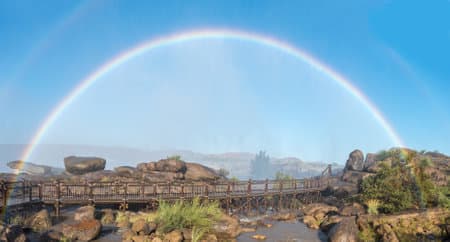
Victoria Falls has a different seasonal rhythm from safari areas. The high-water period, usually from February to May, produces the most powerful scenes, thunderous sound, and heavy spray. This is the time when the water curtain feels vast and dramatic, especially on the Zimbabwe side, which offers wide viewing angles. If your goal is to understand why the falls are considered one of the world’s great natural spectacles, this is the period to target.
Low-water months, usually from September to December, reveal more of the basalt face and the rocky structure of the gorge. That makes them useful for travellers who want clearer photographic detail and activities such as Devil’s Pool, depending on operating conditions. May and June often sit in the sweet spot: the falls are still impressive, the mist is beginning to ease, and safari conditions are getting stronger. That is why many Zimbabwe itineraries pair Victoria Falls with Hwange or Matobo around this time.
If you want one trip that includes both dramatic falls and solid safari viewing, May or June is often the most practical compromise.
The dry season is usually the best answer for classic safari expectations, but the wet season has advantages that are easy to overlook. In the dry months, roads are generally easier, lodges are more straightforward to access, and wildlife is more visible around remaining water. That is why experienced planners often recommend this period for travellers who want to minimise logistical uncertainty. The trade-off is that peak months can be busier and more expensive, especially in the most sought-after camps and lodges.
| Season | Main advantages | Main drawbacks | Best for |
|---|---|---|---|
| Dry season | Better visibility, concentrated wildlife, easier road conditions | Higher prices, colder mornings, hotter late-season days | First-timers, photographers, wildlife-focused travellers |
| Wet season | Green scenery, birding, lower demand, dramatic skies | More dispersed animals, occasional road delays, variable visibility | Repeat visitors, birders, value-conscious planners |
The wet season is not a weak season; it is a different one. Travellers who enjoy landscape photography, newborn animals, and lush riverbanks often find it more rewarding than expected. The main challenge is that sightings can require more patience, and some remote camps may operate with more restrictive access after heavy rain. For a well-designed itinerary, that is manageable. Zimtrek often plans wet-season trips with tighter routing and fewer long overland transfers so the schedule stays smooth.
For a first Zimbabwe safari, June is often the best compromise if you want comfort, good wildlife, and strong falls conditions. July and August are the classic wildlife months, while May offers excellent value and a softer introduction before the peak crowds build. If your goal is to combine safari, the falls, and a slightly lower budget, November is also worth considering, provided you are comfortable with the start of the rainy season and a more variable wildlife pattern.
For many travellers, the smartest plan is not choosing one “best month” for everything, but matching each destination to its ideal season.
Safety questions are common, especially for American travellers planning their first safari in Zimbabwe. The practical approach is to treat safety as a planning issue, not a reason to avoid the country. Well-run safari areas, lodge transfers, and guided activities are the norm in the main tourism circuit, but travellers should still use standard precautions: arrive in daylight where possible, use pre-arranged transfers, keep valuables secure, and follow lodge or guide instructions in wildlife areas. For up-to-date country guidance, review the U.S. State Department advisory before you travel.
Another point to consider is health rather than just security. Malaria risk exists in many safari destinations, especially in lower-lying areas and during the rainy season. Speak to a travel clinic well before departure about prevention advice that suits your health profile. Also, remember that the dry season can bring very cold dawn game drives in June and July, while October can be intensely hot. Good planning reduces discomfort more than any single packing item.
Do not rely on generic online advice alone for health, border, or security decisions; check current official guidance close to travel.
Pricing in Zimbabwe usually tracks demand and availability. Peak season, especially July through October, tends to have the strongest lodge demand, which pushes rates up and reduces flexibility for last-minute planning. Shoulder months such as May, June, and November often provide better value because camps are more available and itineraries can be built with more breathing room. In practical terms, a well-planned shoulder-season trip can feel noticeably more relaxed without sacrificing too much on wildlife quality.
For budget-conscious travellers, the most important factor is not just the nightly lodge rate, but the full routing. Shorter road transfers, fewer internal flights, and smart combinations of parks can make a meaningful difference in total cost. Zimbabwe works particularly well when itinerary design is efficient, because moving between Victoria Falls, Hwange, and other key areas can be structured to reduce wasted travel time. Zimtrek often builds itineraries around this principle so travellers get better value from each night on the ground.
A Zimbabwe safari does not require complicated gear, but seasonal packing matters. For dry season travel, layered clothing is essential because mornings can be cold and afternoons warm. For wet season travel, a light rain jacket and quick-dry clothing are worth carrying. Neutral colours are still the easiest choice for game drives, and closed shoes are more practical than sandals for walks, lodge paths, and dusty vehicle transfers.
| Item | Why it matters |
|---|---|
| Warm layer | Cold dawn drives in June and July can surprise first-timers |
| Light rain jacket | Useful in the green season and around Victoria Falls spray |
| Binoculars | Helps with birds, distant predators, and riverbank sightings |
| Sun protection | Important in dry months, especially September and October |
| Small soft bag | Easier for light aircraft and lodge transfers than hard luggage |
One common mistake is assuming one month is best for every Zimbabwe experience. Victoria Falls, birding, and wildlife drives peak at different times, so the right answer depends on what you want most. Another mistake is focusing only on price and ignoring routing. A cheaper itinerary that wastes time on long transfers may deliver less value than a slightly more expensive but better-designed route.
Travellers also underestimate seasonal comfort. June and July can feel surprisingly cold at sunrise, and October can be hotter than many people expect. Finally, some visitors overlook how much the mood of a trip changes between dry and green seasons. The dry season is about clarity and concentration; the wet season is about texture, colour, and birdlife. When you understand that distinction, planning becomes much easier and the trip feels more deliberate.
Get in touch with us and we'll get back to you as soon as possible.
Here's what sets us apart
We deliver exceptional experiences at fair, transparent prices, ensuring every journey offers genuine quality, comfort, and unforgettable adventure without unnecessary costs.
Your journey is crafted around your interests, pace, and travel style, giving you a custom-made adventure that feels authentic, meaningful, and entirely your own.
From planning to your final day of travel, our dedicated team is available to guide, assist, and ensure your trip runs smoothly and stress-free.
Don't just take our word for it
Keep reading