Discover the significance, habitats, and viewing tips for Africa's iconic wildlife.

Image via 123RF
Get in touch with us and we'll get back to you as soon as possible.
Here's what sets us apart from the competition
We deliver exceptional experiences at fair, transparent prices, ensuring every journey offers genuine quality, comfort, and unforgettable adventure without unnecessary costs.
Your journey is crafted around your interests, pace, and travel style, giving you a custom-made adventure that feels authentic, meaningful, and entirely your own.
From planning to your final day of travel, our dedicated team is available to guide, assist, and ensure your trip runs smoothly and stress-free.
Find answers to common questions
Pack lightweight, neutral-coloured clothing, a warm layer for early-morning drives, sturdy shoes, sun protection, insect repellent, a good camera/binoculars, and any required medications or vaccinations after consulting your healthcare provider and local travel advice.
We work with a curated network of vetted lodges, camps, guides, and ground operators selected for local knowledge, safety standards, experience, and suitability to the traveller’s interests and budget.
Yes; itineraries can be tailored for wildlife photography, birding, family-focused activities, honeymooners, and adventure travel, with appropriate accommodations, vehicle options, and guide specialisations arranged on request.
Zimtrek specialises in safaris across Southern and East Africa, with core destinations including Zimbabwe, Botswana, Zambia, South Africa, Namibia, Kenya, and Tanzania.
Zimtrek designs tailor-made safaris including game drives, walking safaris, mobile tented camps, photographic safaris, and combined wildlife-and-cultural itineraries to suit solo travellers, couples, families, and small groups.
In This Article
Understanding the Big Five
Top Safari Destinations
Planning Your Safari
A Big Five safari is less about ticking names off a list and more about understanding how habitat, timing, and guiding quality shape the whole experience. The five animals in this group - lion, leopard, African elephant, Cape buffalo, and rhino - were originally singled out by hunters for the difficulty and danger involved in tracking them on foot. Today, the term has a different meaning for most travellers: it signals the classic African wildlife encounter, especially in Southern Africa, where private reserves and national parks can deliver excellent viewing when the trip is planned well.
For travellers, the real value of a Big Five safari is not just the species list. It is learning which parks favour lions, which reserves are reliable for rhino, and when a guided drive will outperform a self-drive route.
If you are researching where to go, it helps to think in terms of behaviour and landscape. Elephants are often easier in riverine and floodplain systems; leopards need cover and patience; rhinos depend on well-managed conservation areas; and lions and buffalo respond strongly to water availability and grazing patterns. That is why two safaris in the same country can feel completely different. Zimtrek Travel plans around those differences, matching route, lodge style, and season to the type of sightings you actually want.
Lions are usually the easiest of the five to identify because they often rest in open country and travel in prides. In Southern Africa, good lion viewing is common in areas with strong prey populations and open grasslands, including parts of Kruger and the greater Okavango region. Look for bulky shoulders, a rounded head, and a tail with a black tuft. Dawn and late afternoon usually offer the best chances of seeing active movement rather than sleeping forms under shade.
Leopards are solitary, cautious, and excellent at using trees, riverbanks, and thickets as cover. That makes them the most rewarding challenge on a safari. They are known for draping prey in trees and for being active at dawn, dusk, and sometimes at night. Private reserves with experienced guides and radio communication between vehicles often improve your chances because leopards can be tracked by fresh signs, alarm calls, and habitual crossing routes.
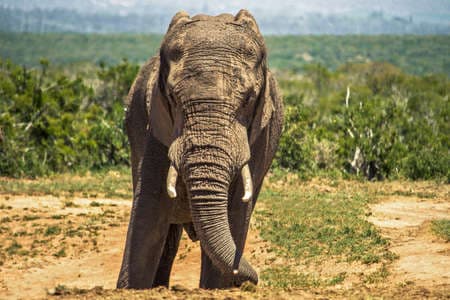
African elephants are usually the most straightforward Big Five sighting because of their size and the fact that they travel through many habitats. Herds may use river corridors, mopane woodlands, and marsh edges, especially in Botswana and Zimbabwe. A good field clue is the combination of a long trunk, large fan-shaped ears, and tusks that vary widely in size. In dry months, they often concentrate near permanent water, which makes them easier to locate.
Cape buffalo are herd animals, but they do not always offer easy viewing because they often stay close to dense vegetation or wet ground. Their horns form a heavy boss across the forehead, and their dark bodies can look almost black at distance. Buffalo are common in many of the best safari regions with good grass and water, especially where floodplains and seasonal marshes support large herds. They are often encountered in groups rather than as individual animals, which makes them easier to spot once you are in the right area.
Rhino viewing depends heavily on where conservation management is strongest. White rhino are generally associated with open grassland and are easier to see than black rhino, which prefer thicker vegetation and are more elusive. Both species have been deeply affected by poaching pressure, so sightings are often concentrated in protected zones with active monitoring. If rhino is a priority, ask specifically whether your itinerary includes a reserve with a stable population and a strong anti-poaching programme rather than assuming any park will deliver.
animals define the classic safari benchmark, but the viewing challenge differs sharply by species
The phrase “Big Five” came from big-game hunting, where these animals were judged by the difficulty and danger involved in pursuing them on foot. The label had nothing to do with size alone. Leopard and Cape buffalo were especially valued because they could be dangerous at close range and difficult to track. Over time, the meaning shifted as hunting declined in many areas and photographic safaris became the dominant way travellers engage with wildlife. That shift matters because it changes the ethical framing: today, many visitors use the term to celebrate conservation, responsible tourism, and protected habitat rather than trophy value.
Understanding the hunting origin helps explain why the Big Five are not the biggest or most famous animals in Africa. The grouping is historical, not biological.
This history also explains why travellers should be careful with language and expectations. A modern safari is not about chasing animals for the sake of a checklist. It is about how guides interpret tracks, how lodges manage access, and how your spending supports local conservation economies. That is especially important in Southern Africa, where private reserves and community-linked tourism often help fund wildlife protection.
For travellers planning from Zimbabwe or arriving through Johannesburg, Victoria Falls, or Maun, the best destination depends on which animals matter most and how much travel time you have. Some parks are reliable for four of the five, while others offer better chances for rhino or leopard. The table below gives a practical comparison rather than a generic ranking.
| Destination | Best for | Viewing notes | Typical cost tier |
|---|---|---|---|
| Greater Kruger / Sabi Sand, South Africa | Leopard, lion, elephant, rhino | Private reserve access and expert guides improve chances, especially for leopard and rhino | Mid to high |
| Chobe and Okavango, Botswana | Elephant, buffalo, lion | Excellent water-based wildlife viewing; leopard is possible but more elusive | Mid to high |
| Masai Mara, Kenya | Lion, leopard, elephant | Strong predator action, but this sits outside Zimtrek’s Southern Africa focus | Mid |
| Serengeti and Ngorongoro, Tanzania | Lion, elephant, rhino | Good for broad wildlife density; rhino is more location-specific | Mid to high |
| Hwange, Zimbabwe | Elephant, lion, buffalo | Excellent for elephant and predator viewing; rhino access depends on itinerary design | Good value to mid |
In Southern Africa, a well-designed route often combines a high-reliability park with a more specialised reserve. For example, a Kruger-based itinerary may suit travellers who want a strong all-round Big Five experience, while Botswana works especially well if elephants and buffalo are a priority and you want a more exclusive, water-rich setting. Zimbabwe can be very rewarding for travellers who value fewer crowds, excellent guiding, and easy combinations with Victoria Falls.
The idea of a Big Six varies by source, which is why travellers should treat it as a marketing shorthand rather than a fixed wildlife category. In some contexts, a sixth animal is added to create a more expansive bucket list, often to include a marine species or another iconic mammal. That said, the original Big Five remains the standard reference in safari planning, and it is still the most useful framework if your trip is centred on Southern African game drives.
If a lodge advertises a “Big Six,” ask exactly which animals are included. The meaning is not universal, so the term should be checked rather than assumed.
One question that comes up often is why giraffes are not part of the Big Five. The short answer is history. They were not among the animals that created the old hunting prestige around danger and difficulty. Giraffes are iconic and beautiful, but they were not defined by the same close-range risk profile. In other words, the Big Five is a historic trophy category, not a list of the most famous African animals.
Hunting rules differ across countries, and this is where travellers should be precise. In parts of Africa, regulated hunting is still permitted under licence and quota systems, while in other areas it is banned or highly restricted. Legal hunting, where allowed, is managed through national law, conservation policy, and permit conditions. That does not make it ethically neutral, and many travellers prefer photo safaris because they generate revenue without removing animals from the ecosystem.
For most visitors, the practical takeaway is simple: if your aim is wildlife viewing, book a photographic safari with a reputable operator and ask how your trip supports conservation. Ethical safari operators should be able to explain how they work with protected areas, local communities, and anti-poaching efforts. They should also be transparent about wildlife distances, vehicle codes, and how guides behave around sensitive species such as rhino.
Do not assume “wildlife experience” means the same thing as “wildlife conservation.” Ask what activities are legal, what fees support, and whether the lodge follows low-impact viewing rules.
The best Big Five trips are built around three variables: season, guide quality, and movement between habitats. Dry season often improves visibility because animals concentrate near permanent water and the bush is less dense. That is helpful for first-time safari travellers and for anyone hoping to maximise the number of species in a short stay. In wetter months, the landscape is greener and often more beautiful, but sightings may require more patience and stronger guiding.
| Planning choice | Why it matters | Best approach |
|---|---|---|
| Guided vs self-drive | Guides read tracks, calls, and animal behaviour faster | Choose a guide-led reserve if leopard or rhino matters most |
| One park vs multi-stop | Different habitats improve odds across species | Combine a riverine area with open savanna or woodland |
| Short stay vs longer stay | More game drives reduce the effect of bad timing | Plan at least three nights in each core wildlife area |
A useful rule is to choose one destination that is excellent for general viewing and one that is specialised. For example, a traveler might use Kruger for broad Big Five coverage and then add a private reserve for better leopard and closer-guided sightings. In Botswana, a mix of Chobe and the Okavango gives you strong elephant encounters plus a different wetland rhythm. If your priority is rhino, check conservation status before booking and accept that the best sites are often the ones with strict access controls.
The most common mistake is choosing a destination only because it is famous. Fame does not equal suitability. Another mistake is expecting the Big Five to appear in the same order or on the same day. These are wild animals moving through large landscapes, not a staged show. A third mistake is underestimating the value of a skilled guide. In many reserves, especially those with dense bush or water channels, guide experience can change a trip from average to exceptional.
The strongest safari itineraries usually balance realism and ambition: one high-probability park, one specialist reserve, and enough time to let the wildlife pattern unfold naturally.
Leopard is usually the hardest because it is solitary, nocturnal or crepuscular, and very good at staying hidden.
For travellers focused on maximising sightings, a guided safari is usually better, especially in private reserves or areas with dense bush and mixed terrain.
Because the term came from hunting history, and giraffes were not part of the original dangerous-to-hunt grouping.
For Southern Africa, South Africa and Botswana are often the most straightforward choices, while Zimbabwe can be excellent for travellers who want strong guiding and fewer crowds.
Get in touch with us and we'll get back to you as soon as possible.
Here's what sets us apart
We deliver exceptional experiences at fair, transparent prices, ensuring every journey offers genuine quality, comfort, and unforgettable adventure without unnecessary costs.
Your journey is crafted around your interests, pace, and travel style, giving you a custom-made adventure that feels authentic, meaningful, and entirely your own.
From planning to your final day of travel, our dedicated team is available to guide, assist, and ensure your trip runs smoothly and stress-free.
Don't just take our word for it
Keep reading